Formation de français pour entreprise
Learn how AI-driven French training can help businesses in Quebec comply with new language laws while enhancing employee skills and productivity.
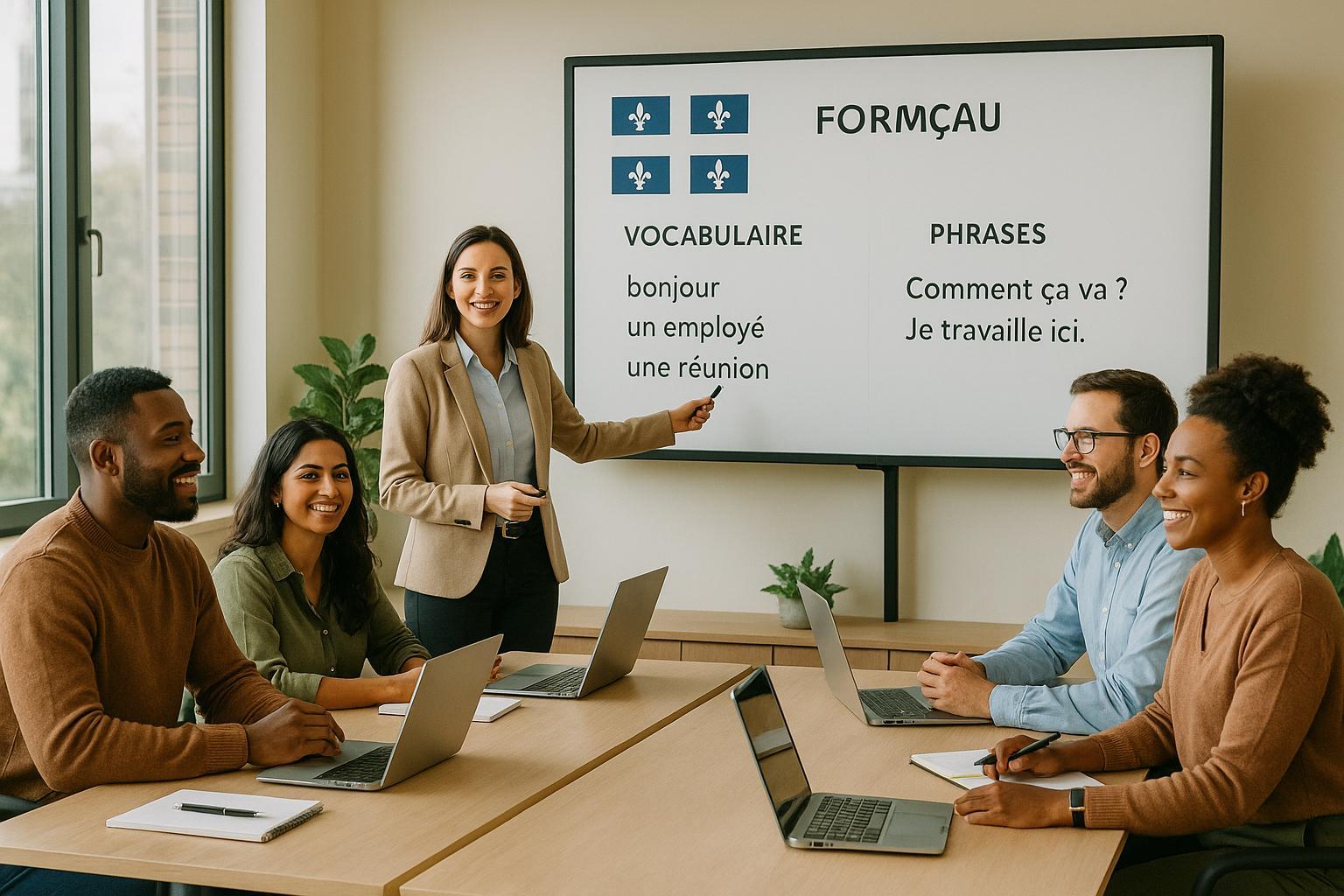
Formation de français pour entreprise
Want to meet Quebec's new French language rules and boost your team's skills? Here's what you need to know:
- Bill 96 Compliance: Starting June 1, 2025, businesses in Quebec must prioritize French in all operations, including internal communication, customer interactions, and marketing materials. Companies with 25+ employees must register with the OQLF and follow a francization process. Non-compliance could lead to fines of up to $30,000/day.
- Business Benefits: French proficiency improves employee confidence, retention, and communication, especially in customer-facing roles. Bilingual employees often earn 2%-5% more and contribute to a 21% increase in workplace productivity.
- AI-Powered Training: Tools like Francoflex use AI to personalize French learning for employees, track progress, and ensure compliance with Bill 96. Features include role-specific lessons, daily conversation practice, and detailed reporting for OQLF certification.
- Flexible and Scalable: AI platforms support self-paced learning and can train teams from small businesses to large enterprises, reducing training costs by 50% while improving engagement and fluency.
Stay competitive and compliant with AI-driven French training for your team.
Webinar: A review of current best practices in adult French-language training in Quebec
How AI Makes French Training More Effective
Traditional approaches to French training often fail to meet the unique needs of modern workplaces. Enter Francoflex, an AI-powered solution offering French training tailored to each employee's role and work environment.
AI Tailors Training to Individual Needs
AI technology takes personalisation to the next level by continuously monitoring each learner's progress and adjusting the training plan in real time. It tracks metrics like quiz scores, time spent on lessons, and interactions with materials to craft a unique learning experience for every employee[1]. This approach isn't just theoretical - businesses using AI-driven learning systems report a 30% boost in employee engagement and a 25% improvement in learning outcomes[2]. By recommending specific resources - such as videos, articles, and quizzes - AI pinpoints and addresses individual learning gaps[1]. This focus on personalisation ensures that companies can scale their training programs without losing effectiveness.
Scalable Training for Growing Teams
AI-powered platforms like Francoflex are designed to grow alongside your business, providing high-quality training whether you have a handful of employees or tens of thousands. Francoflex, for instance, can handle teams ranging from 1 to 50,000 people, all while managing diverse learning paths and tracking progress with precision. According to Harvard Business Review, AI-based systems can reduce training costs by 50%, while Deloitte highlights a 24% productivity increase and a 30% cost reduction for companies using such platforms[3][4]. These systems also integrate seamlessly with existing Learning Management Systems (LMS), making it easy for businesses to expand their French training programs as their workforce grows[1]. This combination of scalability and cost-efficiency makes AI-driven training an invaluable tool for businesses of all sizes.
Flexible Learning for Busy Professionals
For employees juggling full schedules, self-paced learning is a game-changer. With 77% of workers reporting increased workloads, the flexibility to learn at their own pace is essential[5]. AI enhances this experience by delivering just-in-time resources, such as relevant vocabulary and phrases, exactly when employees need them[6]. A LinkedIn study found that 74% of employees prefer learning during downtime, making self-paced training a natural fit for today's workforce[7]. This flexibility is even more critical as many Gen Z and millennial employees balance side hustles with their primary jobs, stretching their time and mental energy across multiple commitments[5]. Additionally, Gartner notes that AI-driven analytics can enhance decision-making and improve employee performance by up to 30%[7].
AI-powered French training not only adapts to individual needs but also supports the demands of modern work environments, making it an effective solution for businesses aiming to upskill their teams.
Francoflex Features for Workplace French Training
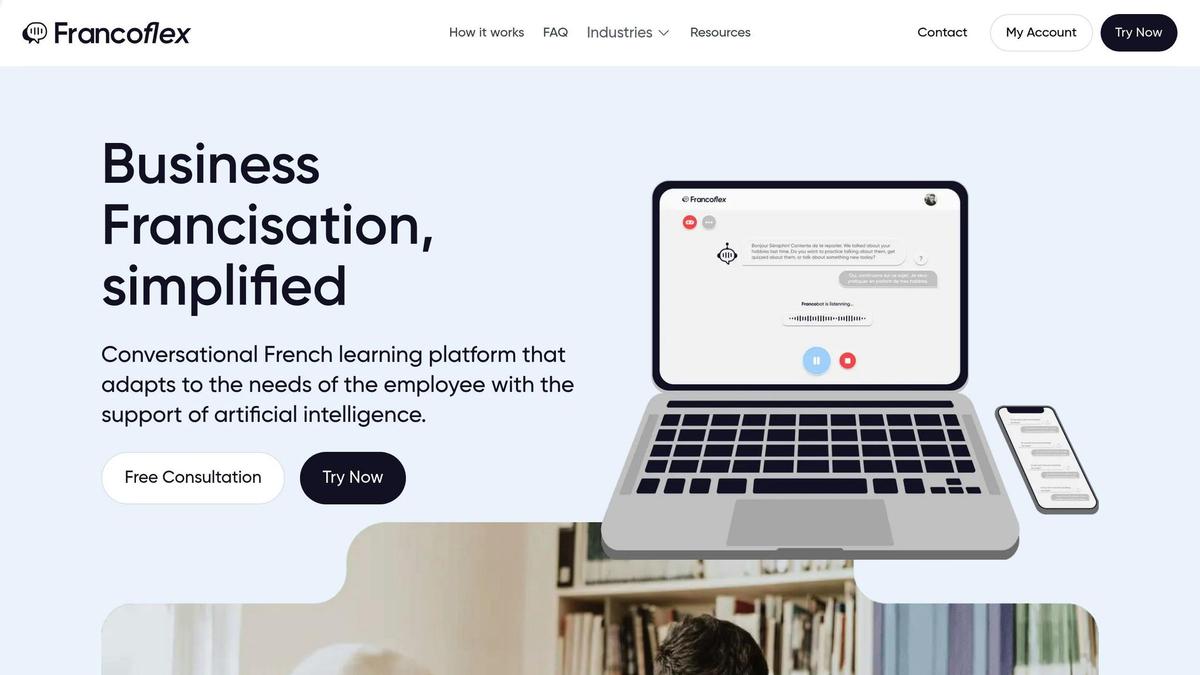
Building on AI-driven learning advancements, Francoflex offers tailored AI personalisation and comprehensive compliance tracking, making workplace French training more relevant and effective.
Industry-Specific French Lessons
Instead of generic lessons, Francoflex designs content that reflects the vocabulary and scenarios specific to various professional roles. For instance, healthcare workers learn medical terminology and phrases for patient interactions, while retail employees focus on customer service expressions and product descriptions. This targeted approach ensures that learners can immediately apply their skills on the job.
The AI system analyses each employee's role and industry to deliver relevant content. Manufacturing staff, for example, practise safety instructions in French, while administrative professionals focus on meeting vocabulary and email communication. This tailored approach speeds up learning by directly connecting lessons to daily tasks. Progress is tracked in real time to ensure compliance and certify language proficiency.
Progress Reports and Certification Support
Francoflex generates reports that meet the certification requirements for the Office quebecois de la langue francaise (OQLF). Customisable dashboards document compliance with Bill 96 standards, including skill assessments, completion rates, and mastery levels.
These tools help HR departments demonstrate their efforts to regulatory bodies. The data tracks time spent learning, completed modules, and skill improvements, providing the necessary documentation to meet Quebec's language requirements.
Managers receive regular updates on team performance, allowing them to identify employees who may need additional support or those ready for advanced training.
Daily AI Conversation Practice
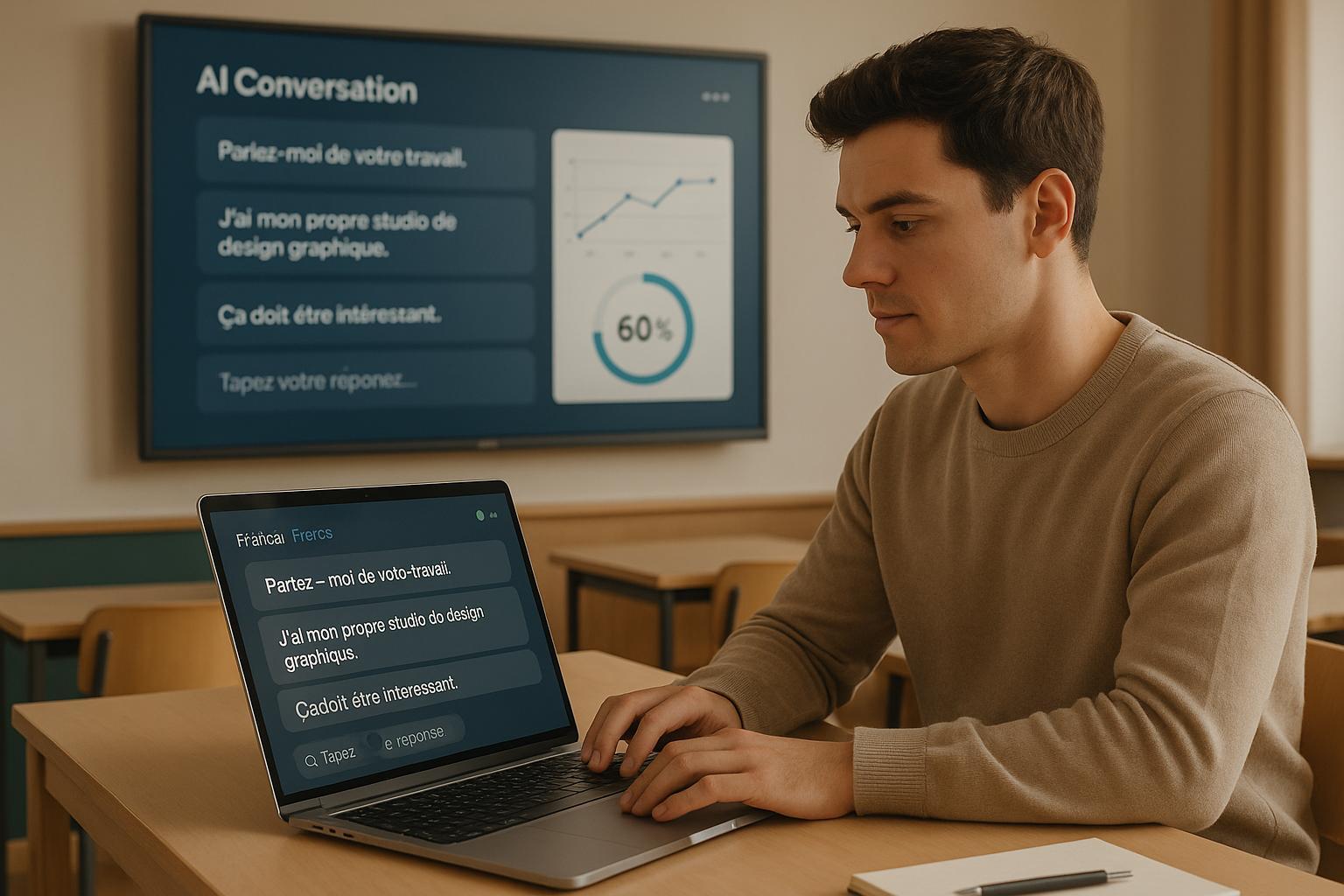
Employees engage in daily conversations with virtual tutors, which adapt to their French proficiency and professional context. These interactions mimic real-life situations, such as customer management or team meetings. The AI adjusts its responses to match the learner's level, ensuring the conversation remains both challenging and accessible.
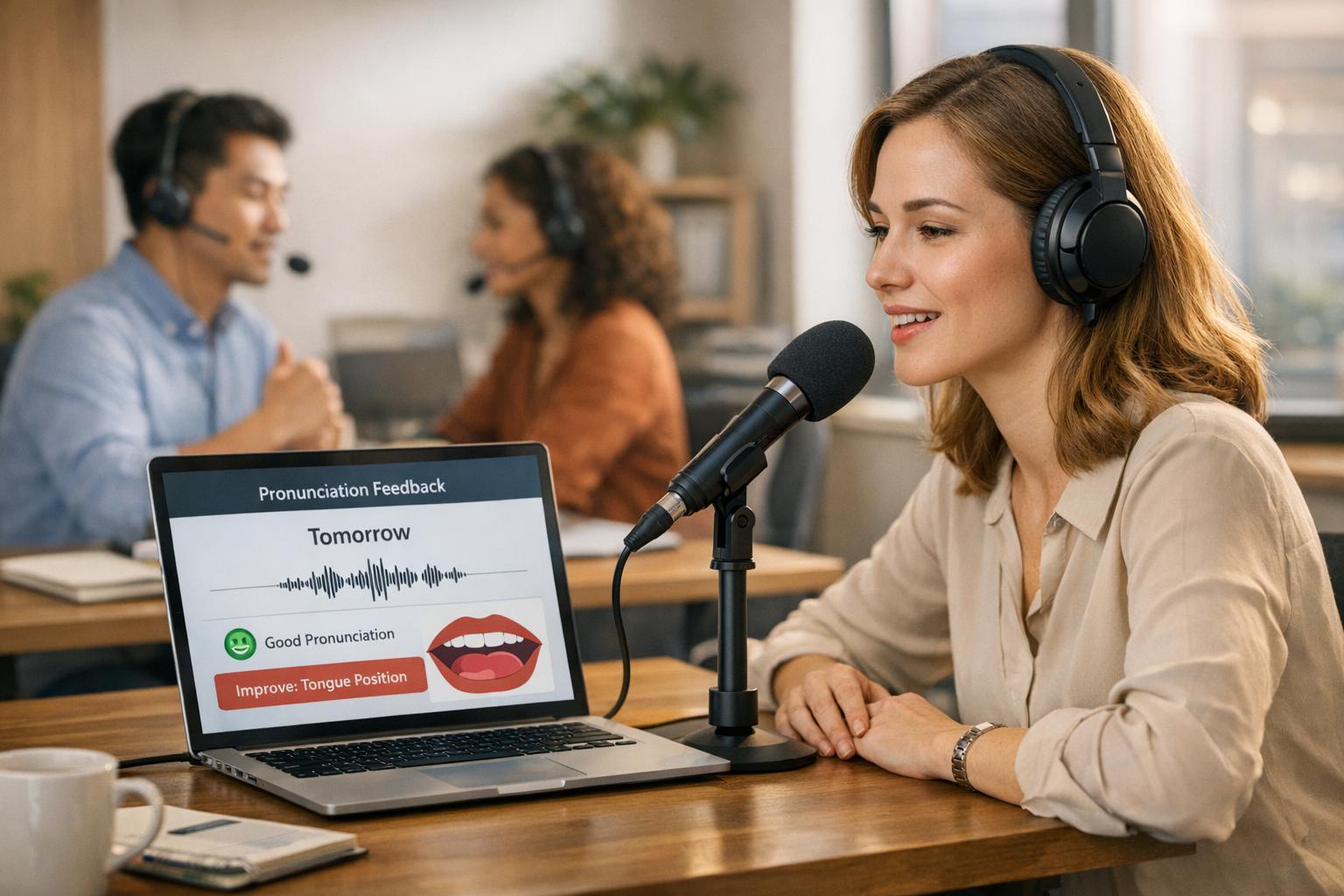
The system provides instant feedback on pronunciation, grammar, and vocabulary, enabling real-time corrections that accelerate progress.
For example, a multinational tech company implemented AI-based language tools for its global teams. Within a year, employee engagement rose by 25%, and voluntary turnover rates dropped significantly [3].
These conversation practices create a judgment-free environment where employees can make mistakes without fear of criticism [9]. Daily interactions strengthen vocabulary and fluency by encouraging natural language use, turning French into a practical communication tool rather than just an academic subject.
These advanced tools simplify the integration of French training into your workplace, making it a seamless and effective solution.
How to Set Up AI-Powered French Training at Your Company
Getting Francoflex up and running in your workplace involves a step-by-step process that aligns with your company's goals and ensures you meet the requirements of Bill 96. The setup can be broken down into three main phases that focus on effectiveness and compliance.
Check Your Team's French Training Needs
The first step is to evaluate your team's current French language skills. A training needs analysis will help determine how your company communicates and pinpoint where French training can make a difference [11].
Start by identifying roles that require French proficiency and conducting assessments to measure speaking, listening, reading, and writing skills. These evaluations help establish each employee's starting point and allow you to group learners by skill level [10]. For example, employees in customer-facing roles, international project management, or regulatory compliance may need stronger French skills than those in back-office positions [10].
You can also survey employees to understand their current proficiency, learning preferences, and specific language needs for their roles. This will highlight gaps between existing skills and job requirements.
Managers and team leaders can provide valuable insights into where French skills could improve workplace effectiveness. For instance, a manufacturing supervisor might point out the need for better communication of safety instructions, while a customer service manager might focus on improving vocabulary for client interactions.
Regular assessments will keep you updated on employee fluency levels, ensuring that your training remains targeted and effective. These evaluations also serve as a benchmark for tracking progress and demonstrating compliance with Bill 96. Use these findings to tailor Francoflex to your company's needs.
Configure Francoflex for Your Business
Once you've assessed your team's needs, it's time to set up Francoflex to meet your specific goals and compliance requirements.
Start by defining clear objectives for your French training program. This ensures the platform collects and prioritizes the right learning data for your team [12]. Choose assessment methods that align with your workplace culture, whether that's quick daily interactions or more structured weekly sessions.
Customise the training content to fit your industry's language demands. For instance, healthcare teams might need medical terminology and patient communication phrases, while retail staff would focus on customer service expressions and product descriptions. Manufacturing teams often require safety-related vocabulary, and administrative staff may benefit from lessons on email and meeting communication.
Set up learning paths that align with your business goals and the timelines outlined in Bill 96. Francoflex supports companies of all sizes, from small teams to enterprises with up to 50,000 employees. You can start with a pilot group and expand as needed. The platform's flexibility lets you adjust content difficulty, topics, and assessment schedules based on employee progress and feedback.
Finally, configure Francoflex's reporting tools to meet the requirements of the Office quebecois de la langue francaise (OQLF). Dashboards can track completion rates, skill improvements, and time spent on training. These reports are essential for demonstrating compliance and can be used during regulatory reviews. Once everything is set up, you'll need to monitor progress to refine and improve the program.
Track Progress and Improve Training Results
Tracking progress is key to ensuring the success of your French training program and meeting compliance standards. Francoflex offers detailed analytics that help you measure effectiveness and identify areas for improvement.
Progress tracking is a top priority for 88% of training program reviewers, making it a crucial part of achieving your goals [8]. Use the platform's real-time tracking features to monitor individual employee progress and identify who's excelling and who may need extra support.
Francoflex analytics can reveal learning patterns. For example, some employees might excel at written communication but struggle with pronunciation, while others may need more practice with industry-specific vocabulary. This data allows you to offer targeted support and adjust the training focus as needed.
Regular progress and compliance reports are valuable for HR and management. These reports demonstrate the program's return on investment and help justify continued resources for training. Managers can use them to track team performance, celebrate successes, and provide additional support where required.
To keep the program aligned with your business goals, evaluate the quality and relevance of the training data regularly [12]. Adjust topics, assessment schedules, and content difficulty based on employee feedback and performance metrics. By continually refining the training, you can maximise its impact on your operations.
Francoflex's robust tracking tools not only help with OQLF certification and Bill 96 compliance but also provide actionable insights to make your French training program more effective and aligned with your business needs.
Why AI-Powered French Training Works for Businesses
AI-powered French training offers tangible results, often outpacing traditional classroom methods. It effectively addresses three key business priorities: regulatory compliance, employee satisfaction, and efficiency.
Businesses leveraging AI for training have reported impressive outcomes. For example, employee retention improves by 20%, and training costs drop by 50%. On top of that, personalized AI training accelerates conversational fluency by 30% [3]. These benefits are especially crucial for Canadian companies grappling with talent shortages. Retaining skilled employees not only reduces turnover but also saves substantial recruitment and training expenses.
Unlike conventional classroom setups, AI platforms like Francoflex operate around the clock without adding overhead costs. Reports show that employee engagement increases by 25%, while voluntary turnover decreases significantly [3].
One of the standout features of AI-powered training is its personalization. Unlike generic teaching methods, AI tools tailor learning experiences to individual needs, improving retention rates by up to 40% compared to traditional approaches [3]. By adapting to each employee's learning style, these platforms focus on areas that need the most attention, ensuring a more effective learning journey.
AI training also simplifies compliance with Bill 96, a critical regulatory framework in Quebec. Automated compliance tracking ensures alignment with Bill 96 requirements, generating detailed reports on employee progress, completion rates, and skill development. This not only meets the standards required by OQLF audits but also eliminates the administrative burden of manual tracking.
Workplace integration is another area where AI-powered tools shine. For instance, a global telecommunications company used AI language tools to bridge communication gaps among teams across various regions. This allowed non-native speakers to better understand instructions and actively participate in meetings, reducing errors caused by miscommunication and fostering stronger team collaboration [3].
The scalability of AI training is a game-changer for growing businesses. Whether training a handful of employees or hundreds, the per-user cost remains consistent, and the quality of training doesn't waver. Companies using AI-driven tools have reported a 15% improvement in productivity and collaboration [3]. This scalability ensures that businesses of all sizes can integrate AI training without breaking the bank.
Looking ahead, AI-driven learning tools are expected to be a part of 75% of corporate training programs by 2030 [3]. By adopting these tools now, businesses not only gain operational, compliance, and engagement benefits but also position themselves for long-term success in Quebec's evolving business environment. Early adoption offers a clear edge, especially when building French language skills is critical to staying competitive.
FAQs
How can AI-driven French training help businesses in Quebec meet the requirements of Bill 96?
AI-powered French training solutions are helping businesses in Quebec align with the requirements of Bill 96 by offering personalized and effective language learning tools. These advanced programs are designed to address the specific professional contexts of employees, making the training directly applicable to their everyday tasks.
With lessons tailored to individual needs and real-time feedback, AI tutors support employees in reaching the required French proficiency levels faster. Additionally, detailed progress tracking allows businesses to stay on top of compliance while promoting a bilingual workplace that encourages collaboration and productivity.
How can AI tools like Francoflex enhance workplace French language training compared to traditional methods?
AI-powered tools like Francoflex are transforming how employees learn French in the workplace, offering a tailored and modern approach. Unlike older methods, these tools adjust to each employee's unique skill level, pace, and job-specific needs. This means employees get feedback and corrections that are directly relevant to their progress, helping them improve more effectively.
One standout benefit is the flexibility these tools provide. Employees can access training materials whenever it suits them, making it easier to fit language learning into their busy schedules. With round-the-clock availability, they can balance work responsibilities while developing their language skills, resulting in a learning experience that feels both practical and engaging.
How can businesses evaluate their employees' French language skills to implement effective AI-based training?
To set up successful AI-driven French training, businesses should begin by evaluating their employees' current language abilities. This can be achieved using standardized tests that assess essential skills like speaking, writing, listening, and reading. These tests are often aligned with the Common European Framework of Reference for Languages (CEFR), which ensures evaluations are consistent and fair.
AI-powered tools can simplify this process by offering automated assessments that deliver instant feedback and detailed reports. These tools pinpoint specific areas where improvement is needed, allowing businesses to create customized training programs tailored to their teams' unique requirements. By focusing on workplace-relevant scenarios, employees can enhance their French skills more quickly and efficiently.