Add AI Conversation Training to Your Existing Language Curriculum
Use AI conversation practice to add scalable, role-specific French training that supports Bill 96 compliance with 24/7 access and progress reporting.
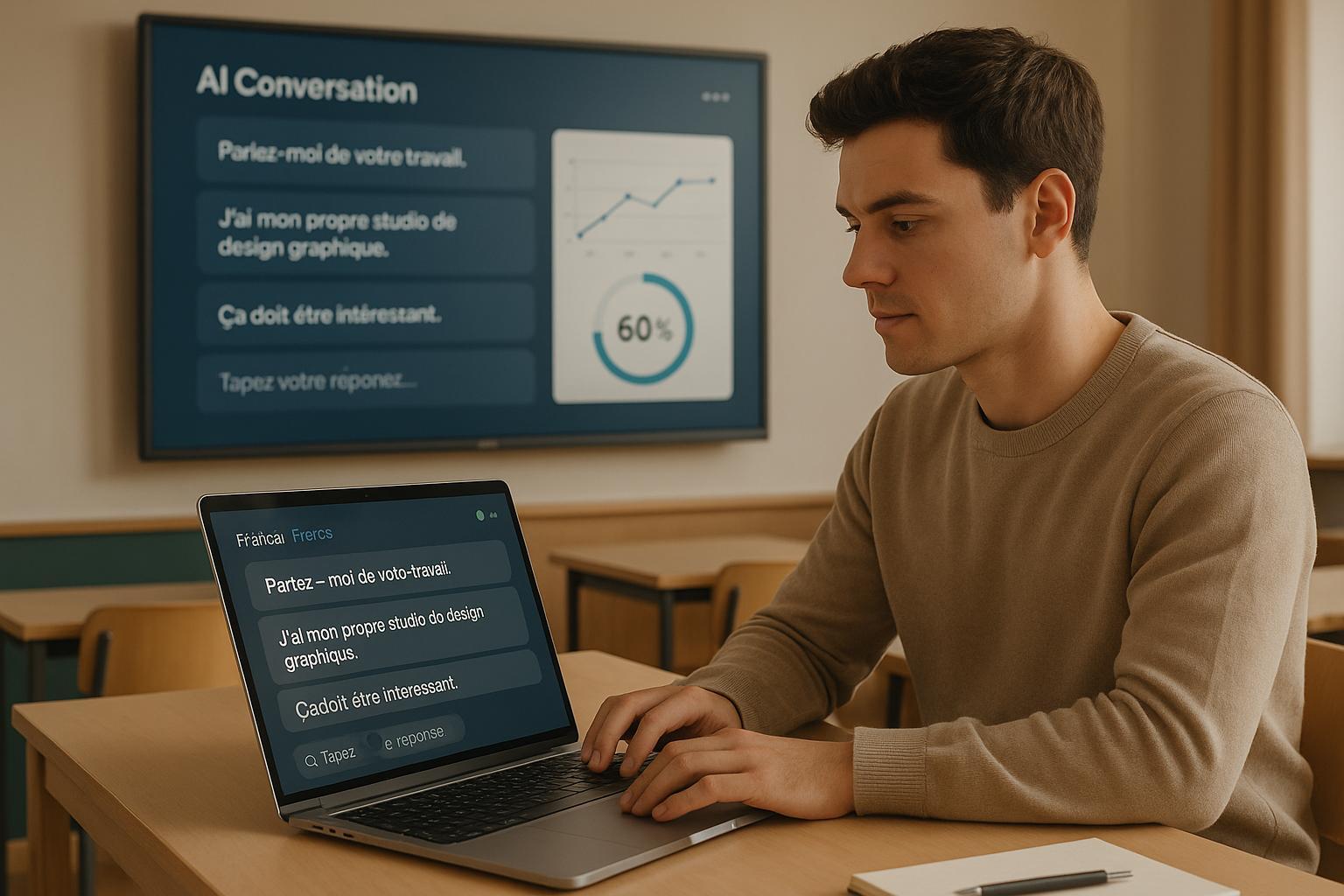
Add AI Conversation Training to Your Existing Language Curriculum
Quebec businesses face strict French language requirements under Bill 96, making it crucial to train employees in French within tight deadlines. Traditional training programs often fail to meet these demands due to long wait times and generic approaches. AI-powered conversation tools offer a practical solution by providing flexible, tailored, and efficient language practice for workplace-specific scenarios.
Key Takeaways:
- Bill 96 compliance: Companies with 25+ employees must ensure French is the primary workplace language, with penalties for non-compliance.
- AI tools benefits:
- 24/7 availability for all employees, including shift workers.
- Customizable training aligned with job roles (e.g., retail, healthcare).
- Instant feedback for faster learning and confidence building.
- Scalable solutions for small teams or large organizations.
- Progress tracking to meet OQLF's documentation requirements.
- Cost-effective: One-time setup costs with unlimited practice sessions.
AI supplements traditional instructor-led training by filling gaps with personalized, on-demand practice. This combined approach helps businesses meet legal obligations while improving workplace communication and employee confidence.
Learning a language with ChatGPT AI | Bilingual French-English | French Listening | Learn To French

What Is AI Conversation Training?
AI conversation training offers a dynamic way to practise languages, moving beyond static textbooks and repetitive drills. It creates interactive, real-time French conversations tailored to workplace scenarios. These systems respond to learners in the moment, adjusting to their skill level and providing instant feedback. Essentially, it mimics the kinds of conversations employees will actually encounter on the job.
For businesses in Quebec working to meet Bill 96 requirements, this kind of training complements existing francisation programs. It integrates seamlessly into your current curriculum, giving employees more opportunities to practise French in ways that traditional methods may not fully provide. Let's dive into how this technology delivers such interactive experiences.
How AI Conversation Training Works
At its heart, AI conversation training uses language processing technology to interpret and respond to human language in a natural way. During a session, when an employee speaks or types in French, the AI analyzes their input, understands the intent and context, and generates a response - just like a real conversation partner would.
The system picks up on vocabulary, grammar, and conversational cues, guiding learners through realistic scenarios. For example, if an employee is practising how to greet a client in French, the AI doesn't just stick to a script. Instead, it adapts its responses based on what the learner says and adjusts the difficulty as the conversation progresses. Training is customized to reflect specific workplace roles, ensuring employees practise the kinds of interactions they'll face in their day-to-day tasks.
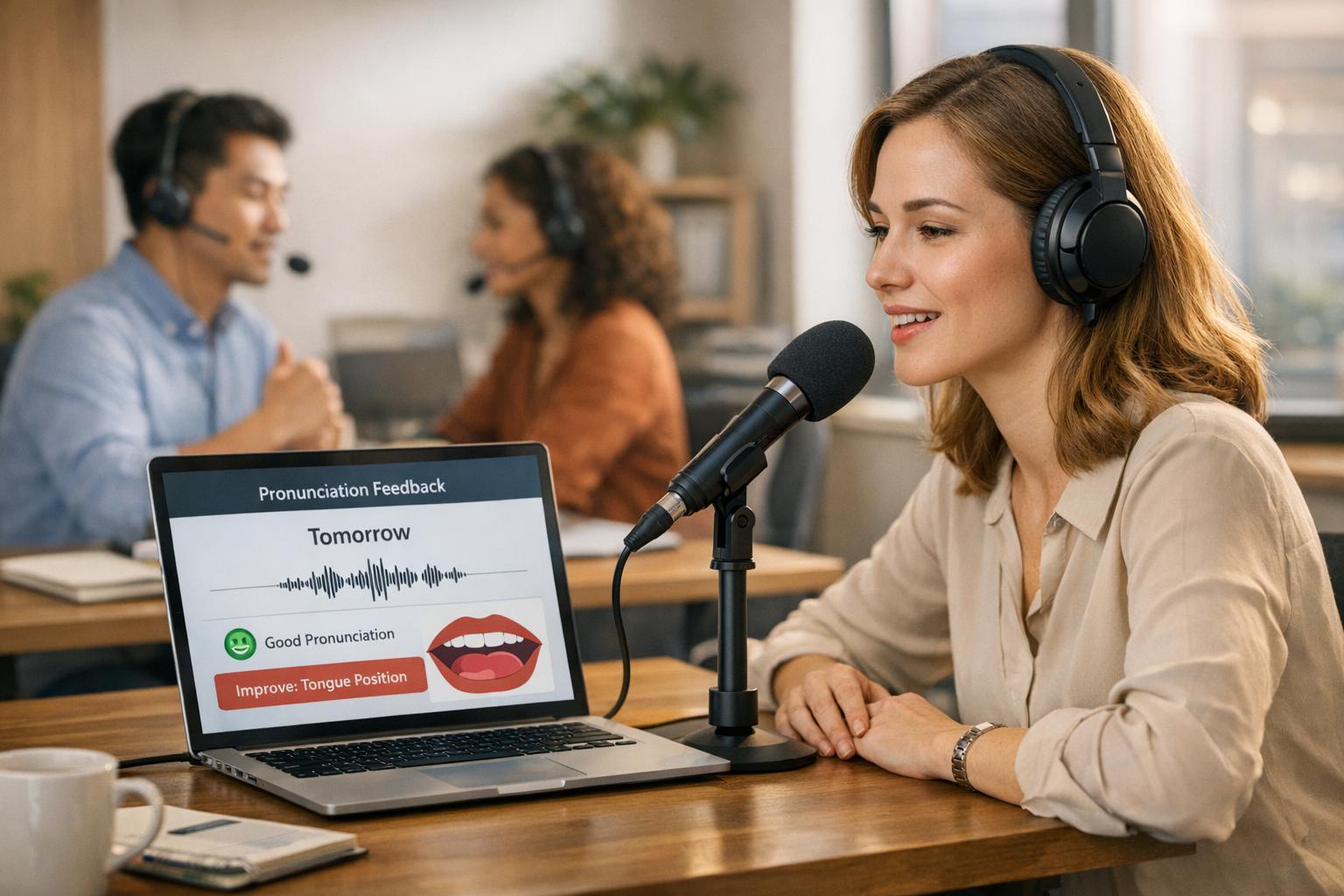
Feedback is immediate. If someone makes a grammatical mistake or uses the wrong word, the AI flags the issue right away and explains the correction. This helps learners adjust and keep practising until they get it right. These adaptive, real-time features are what make AI conversation training such a powerful tool for businesses.
Benefits of AI Conversation Training
AI conversation training directly addresses the language challenges employees encounter in professional settings. Its benefits go beyond convenience, solving many of the obstacles that traditional training methods face - especially in busy workplaces.
-
24/7 accessibility: Employees can practise French whenever it fits their schedule - whether it's during a lunch break, before a shift, or late at night. This flexibility is particularly helpful for shift workers, remote employees, or teams spread across different time zones.
-
Tailored learning paths: Each employee's training is customized to their role and skill level. A retail worker might practise handling customer inquiries, while someone in healthcare might focus on patient interactions. This ensures the training is relevant to their daily responsibilities.
-
Scalability: Whether you're training a handful of employees or thousands, AI systems can handle the demand without needing extra instructors or classroom space. For example, Francoflex can scale from supporting a single user to accommodating up to 50,000, making it a practical choice for both small businesses and large enterprises.
-
Unlimited practice opportunities: AI training allows employees to practise as much as they need, helping them build confidence through repetition. Unlike classroom settings where speaking time is limited, learners can practise privately, which is especially beneficial for those who feel shy or nervous about making mistakes in front of others.
-
Progress tracking and reporting: The AI monitors each learner's performance over time, highlighting strengths and areas needing improvement. This data helps employees see their progress and provides businesses with evidence of their training efforts. For companies navigating Bill 96 compliance, these reports are invaluable for demonstrating measurable results to the OQLF.
AI conversation training is also cost-effective. Traditional language programs often require ongoing expenses for instructors, materials, and classroom space. AI tools, on the other hand, involve an initial setup cost but then offer unlimited practice sessions without additional fees. This makes them a smart investment, especially when weighed against the potential costs of non-compliance with Bill 96 or the risks of miscommunication with French-speaking clients and colleagues.
How to Add AI to Your Language Curriculum
Incorporating AI into your workplace language program doesn't mean starting from scratch. Instead, it's about building on what works and addressing gaps where traditional methods may fall short. This process requires thoughtful planning - understanding your current setup, selecting tools that align with your needs, and seamlessly integrating AI into daily routines.
Review Your Current Curriculum and Training Needs
Start by assessing your existing curriculum and defining clear objectives for using AI. Are you aiming to improve fluency, boost confidence in client-facing roles, or meet compliance requirements like those under Bill 96? These goals will guide how AI fits into your program.
Evaluate your curriculum's focus - speaking, listening, reading, writing, and cultural understanding. This analysis highlights areas where your program excels and where it struggles. AI can step in to provide real-time conversational practice in those weaker areas.
Use performance data to identify trends. If you've been tracking employee progress, look for recurring challenges. Are there specific skills employees struggle with or take longer to master? These insights reveal where AI can make the biggest difference. As you integrate AI, keep collecting data to measure its impact and refine your approach.
Gather feedback from both employees and instructors. Employees might say they need more practice with industry-specific vocabulary, while instructors may notice anxiety around speaking in group settings. This feedback complements your data and provides a clearer picture of the challenges your team faces.
Consider logistical constraints too. How much time do employees currently dedicate to language training? What's their skill level - mostly beginners, intermediates, or a mix? Are scheduling conflicts limiting practice opportunities? AI's 24/7 availability and personalized learning paths can address these issues effectively.
Once you've identified your needs, you'll be ready to choose an AI tool that fits your goals.
Select the Right AI Tools for Your Business
When selecting an AI tool, especially for compliance with Bill 96, it's crucial to choose one that tracks progress and meets your industry's specific needs. The tool should align with your business goals, be easy to integrate, and offer features that make it a practical addition.
Scalability is key. If you're a small business now but plan to grow, you'll need a platform that can grow with you. For example, Francoflex can support anywhere from a single user to 50,000 employees, making it suitable for businesses of all sizes.
Customization is another must-have. The French skills needed by retail employees differ from those required by healthcare workers or office staff. Look for AI tools that offer tailored conversations based on workplace roles and scenarios - like greeting customers, resolving complaints, or conducting meetings - not just generic dialogues.
If compliance with Bill 96 is a concern, the tool should provide detailed progress reports. These reports will document training hours, skill improvements, and proficiency levels, serving as proof of your francisation efforts for the OQLF. Francoflex, for instance, offers custom reports designed specifically for Bill 96 certification, simplifying the documentation process.
Ensure the platform works on commonly used devices. This flexibility is especially important for shift workers or remote employees.
Cost considerations are also important. Traditional language programs often involve recurring expenses for instructors, materials, and space. AI tools typically require an upfront investment but allow unlimited practice sessions without added fees. When calculating the long-term value, don't forget to factor in the potential costs of non-compliance with Bill 96 or the risks of miscommunication with French-speaking clients.
Finally, choose a platform that complements your existing live courses. AI works best as a supplement, reinforcing lessons from instructor-led sessions and providing extra practice between classes. This blended approach maximizes the benefits of both methods.
Add AI Tools to Daily Training Routines
After selecting the right AI tool, the next step is integrating it into daily routines. This requires careful planning and realistic expectations about how learning fits into the workday.
Make access simple and convenient to encourage regular use. Provide clear instructions on how to use the platform, and ensure it works seamlessly on the devices employees already use. If someone can practise a quick conversation during a 15-minute break on their phone, they're far more likely to do it than if they need to reserve a computer in a training room.
Encourage short, frequent sessions instead of long, infrequent ones. Ten minutes a day is more effective than one hour a week. Employees can fit these micro-sessions into natural breaks - before their shift, during lunch, or while commuting. This approach builds consistency without adding stress to their schedules.
Set the expectation that AI practice is a supplement, not a replacement, for instructor-led courses. This creates a low-pressure environment where employees can practise without the fear of performing in front of colleagues.
Make practice relevant by tying it to specific job responsibilities. Instead of vague instructions like "practise French this week," give employees concrete scenarios: "Practise greeting customers and handling returns" or "Work on explaining safety procedures." This makes the training feel immediately useful.
Track progress to keep up momentum. Platforms like Francoflex offer dashboards that show individual and team improvements over time. Share these insights regularly - not as a performance review but as motivation. Seeing tangible progress, like increased speaking time or a growing vocabulary, reinforces that their efforts are paying off.
Incorporate AI into team routines. Some companies set aside 15 minutes at the start of meetings for a quick AI conversation session. Others make it part of onboarding for new hires. Find a routine that fits your workplace culture and stick to it until it becomes second nature.
Monitor how employees engage with the tool and make adjustments as needed. While some may embrace AI training right away, others might need more encouragement or guidance. If participation drops, investigate the reasons - it could be a lack of relevant scenarios or unclear instructions on using the platform.
The goal is to make AI practice feel like a natural part of the workday, not an added chore. When employees see it as a tool that helps them succeed - rather than just another task - they'll use it consistently. That's when you'll start to see real progress in their French proficiency.
Using AI to Meet Bill 96 Requirements

Bill 96 enforces strict French language standards for businesses with 25 or more employees, introducing fines and penalties for non-compliance. AI-powered conversation training offers a practical way to address these regulatory demands while also supporting meaningful efforts to improve French proficiency in the workplace.
What Bill 96 Requires for Workplace Language Training
Bill 96, which came into effect on June 1, 2022, strengthens Quebec's Charter of the French Language. Under this law, businesses with 25 or more employees must register with the Office québécois de la langue française (OQLF) and obtain a francisation certificate. This certificate confirms that French is the primary language used throughout the organization.
The law impacts several key areas of workplace operations. All written communications with employees - such as job postings, employment contracts, and internal policies - must be in French. Customer service must also be available in French, and employees are required to have sufficient French skills to carry out their responsibilities. Additionally, companies must show ongoing efforts to improve French proficiency among their staff.
To meet these requirements, businesses must document their francisation initiatives, including training programs and measurable skill improvements. The OQLF reviews this documentation, and companies that fail to comply may face fines, with penalties increasing for repeat violations.
Recognizing that different roles require varying levels of French proficiency, the law underscores the need for tailored training. For example, a warehouse worker might require a different level of French fluency compared to a customer service representative or a manager. This makes generic, one-size-fits-all training programs ineffective for both compliance and practical workplace needs.
These challenges create a strong case for using AI tools to provide the precise support businesses need to meet Bill 96 requirements.
How AI Tools Support Francisation Compliance
AI-driven conversation training directly addresses the unique compliance challenges posed by Bill 96. These tools provide the documentation, flexibility, and personalized learning that traditional methods often struggle to deliver on a large scale.
AI platforms automatically track key metrics - such as practice time, vocabulary, grammar, and speaking confidence - creating an auditable record of francisation efforts. This data can be compiled into detailed reports for OQLF reviews, saving managers from the time-consuming task of manually tracking training progress. For instance, reports can show how much time each employee has spent practising French and the specific skills they've developed.
The 24/7 accessibility of AI tools also eliminates scheduling conflicts common with traditional training. Employees working irregular hours, such as evening or weekend shifts, can practise at their convenience. This ensures equal access to language training, aligning with the inclusivity goals of Bill 96.
Customizable reports formatted to meet OQLF standards simplify compliance documentation. Tools like Francoflex, for example, generate reports that track training hours and proficiency levels, offering clear evidence of progress without requiring manual record-keeping.
Scalability is another major advantage. As businesses grow, AI platforms can easily accommodate additional employees without the logistical hurdles associated with traditional training methods. The cost per employee often decreases as the number of users increases, making compliance more cost-effective for expanding organizations.
AI tools also help businesses pinpoint gaps in their francisation efforts. For example, if reports reveal that employees in a particular department are struggling with specific skills, managers can intervene early to address the issue before it escalates into a compliance concern.
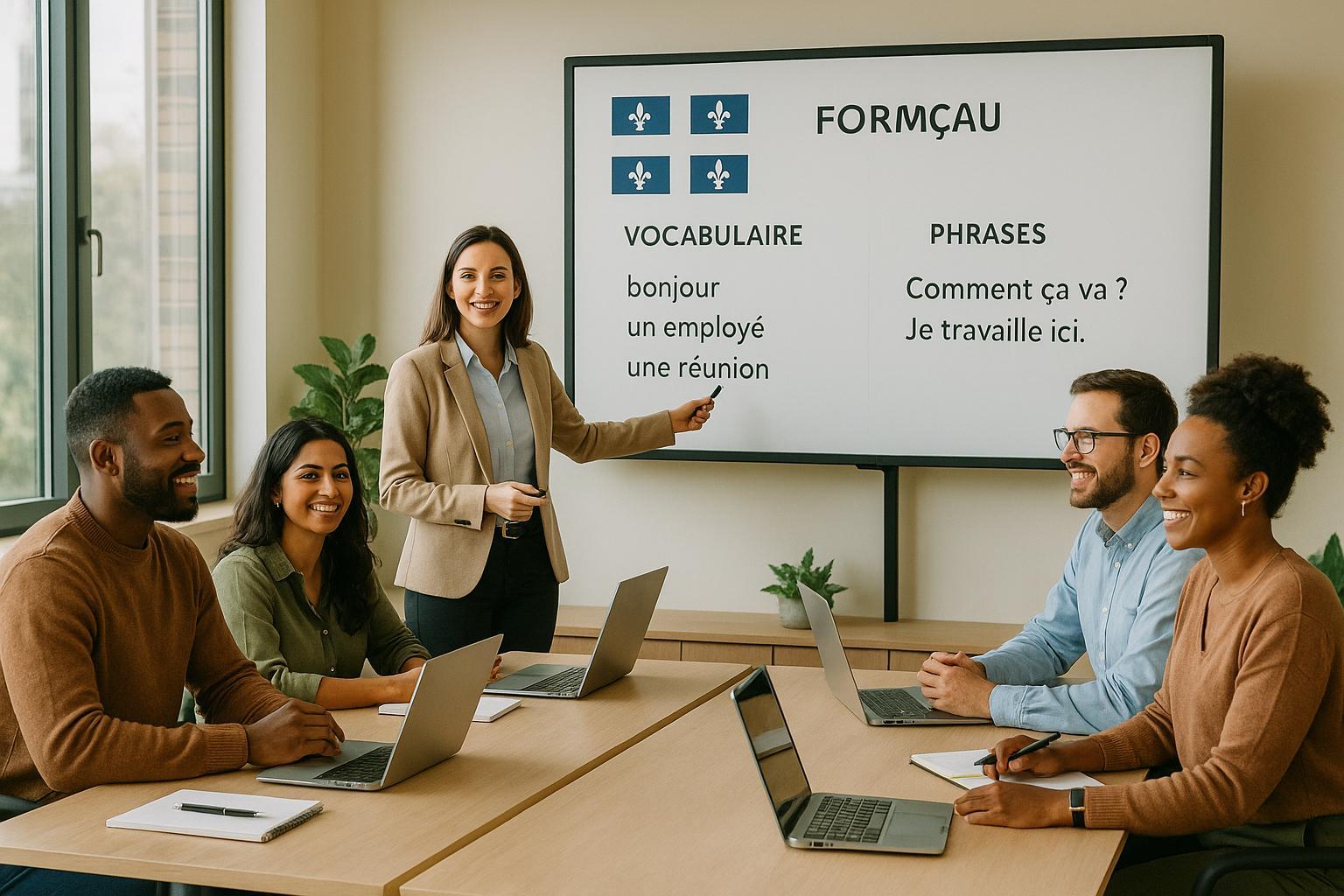
Rather than replacing instructor-led training, AI platforms complement it by offering a blended approach. Employees can attend structured classes to gain interpersonal interaction and cultural context, while using AI tools for daily practice and reinforcement. This combination ensures both confidence-building and consistent skill development.
The cost of non-compliance further underscores the importance of AI training. Beyond fines, businesses risk damaging their reputation and facing difficulties in recruiting French-speaking employees if their francisation efforts fall short. AI platforms provide tangible evidence of progress, demonstrating genuine skill development rather than just checking off training hours. This can strengthen a company's standing during OQLF reviews and showcase its commitment to meaningful francisation efforts. By integrating AI tools into their strategy, businesses can effectively meet legislative demands while fostering stronger French proficiency across their workforce.
Conclusion
Integrating AI conversation training into your language curriculum offers a practical way to tackle the challenges businesses face under Bill 96. These tools provide the adaptability, scalability, and record-keeping needed to meet regulatory demands, all while improving workplace French skills.
AI-powered platforms help overcome common logistical hurdles. Employees, whether working regular office hours or irregular shifts, can access training whenever it fits their schedule. The technology adjusts to each individual's skill level and job requirements, keeping the training relevant and effective.
Combining AI tools with instructor-led sessions not only ensures compliance but also builds real-world communication skills. This approach helps employees gain the confidence they need for everyday workplace interactions. The result? A dual advantage: meeting legal requirements while fostering genuine language competence - making AI conversation training a smart choice for businesses in Quebec.
Francoflex builds on these advantages. Created by Alexa Love-Tremblay, a seasoned language educator, and her co-founder Séraphin, who brings over 15 years of expertise in AI solutions, the platform offers personalized learning for teams of any size - from small groups to organizations with up to 50,000 employees. With custom progress reports tailored for francisation certification and 24/7 availability, Francoflex aligns perfectly with earlier discussions on scalability and compliance, making it a powerful tool for addressing workplace language needs in Quebec.
FAQs
How can AI conversation tools be integrated into instructor-led language programs to improve workplace French skills?
AI conversation tools work hand-in-hand with instructor-led language programs, providing learners with interactive, practical opportunities to practise French through chatbots and virtual assistants. These tools create scenarios that mimic workplace conversations, helping learners gain confidence and improve their fluency.
With AI, learners can practise whenever it suits them, reinforcing what they've learned in class while focusing on language challenges specific to their professional roles. This method not only helps learners improve their French but also ensures they meet workplace demands and comply with regulations like Bill 96.
How do AI conversation tools help businesses meet Bill 96 French language training requirements?
AI conversation tools play a key role in helping businesses align with Bill 96 by offering practical, everyday conversation practice designed around workplace scenarios. These tools monitor individual progress, making it easier to work towards francisation certification goals, and they can be scaled to accommodate teams of any size.
Through realistic simulations of workplace interactions, these AI-driven platforms make learning French more engaging and practical. They help employees gain the confidence and language skills needed to communicate effectively in a professional setting.
How can businesses evaluate the impact of AI conversation training on employees' French language skills?
AI conversation training tools offer businesses a practical way to measure employees' progress in French language skills. These platforms collect data on real-time performance, track engagement, and assess skill growth through interactive exercises and simulated dialogue.
With this information, businesses can pinpoint areas where employees may be struggling, monitor improvements, and fine-tune training approaches to get better results. This approach helps employees steadily enhance their workplace French proficiency while staying aligned with the company's language objectives.