The Best Way to Offer Personalized Oral Practice at Scale Using AI
AI-driven oral French practice for Quebec employers to meet Bill 96: scalable micro-lessons, real-time pronunciation feedback and OQLF-ready progress reports.
The Best Way to Offer Personalized Oral Practice at Scale Using AI
Businesses in Quebec face increasing pressure to meet Bill 96 requirements, especially as the threshold for compliance dropped to 25 employees in June 2025. Ensuring employees can communicate effectively in French is no longer optional - it's mandatory. But traditional training methods often fall short, with scheduling conflicts, long wait times for government programs, and a lack of personalized learning.
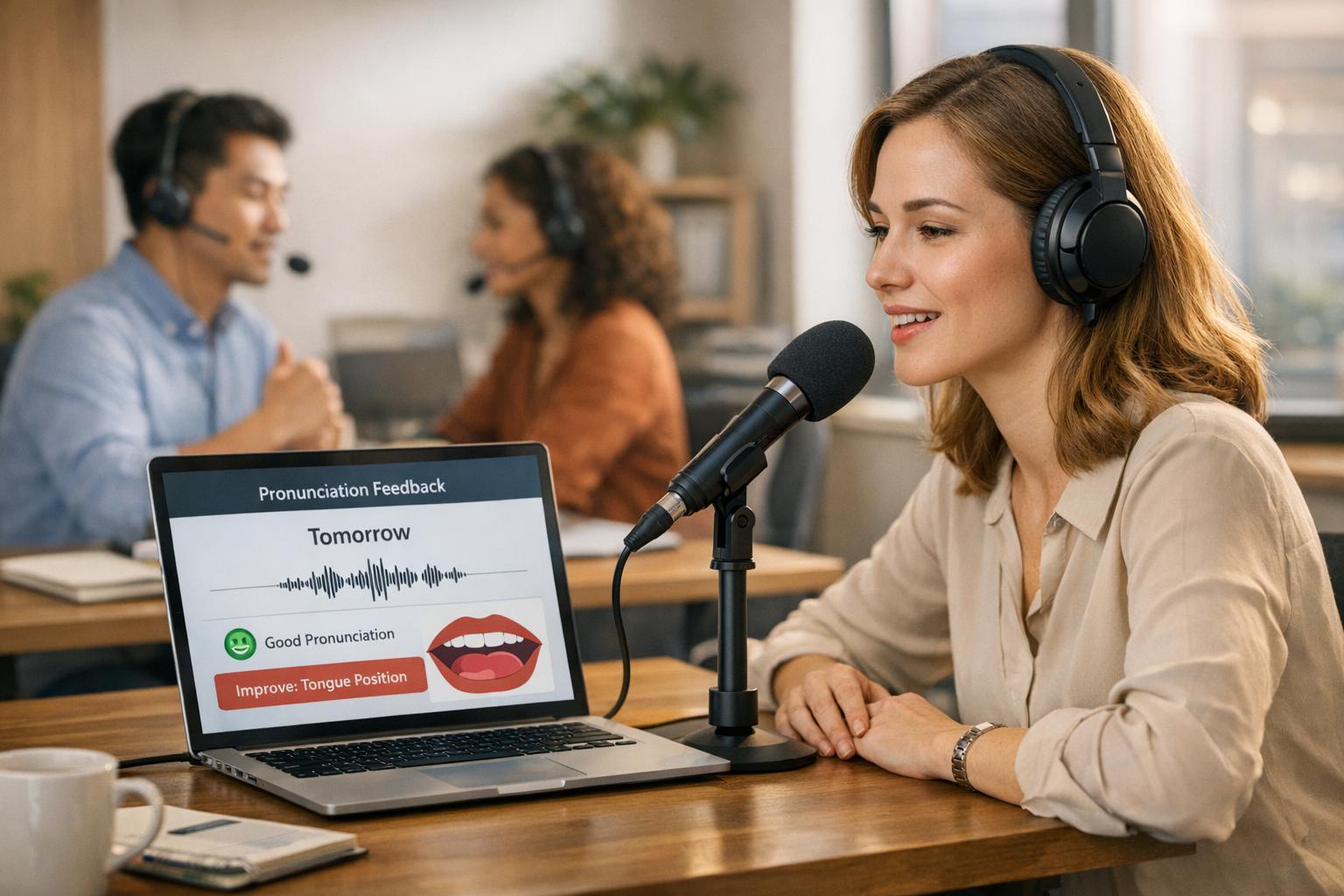
AI-powered tools like Francoflex are solving these challenges by offering scalable, tailored solutions for oral French practice. Employees can access short, job-specific lessons anytime, with real-time feedback on pronunciation and fluency. Companies benefit from automated progress tracking, compliance-ready reports, and seamless integration with existing systems. This approach not only simplifies meeting OQLF standards but also helps employees build confidence in workplace communication.
Key Highlights:
- Bill 96 Compliance: Businesses with 25+ employees must implement formal French training programs.
- AI Advantages: 24/7 access, real-time feedback, and lessons tailored to job roles and skill levels.
- Francoflex Features: Automated tracking, industry-specific vocabulary, and OQLF-ready reporting.
- Cost and Time Savings: AI training reduces costs by up to 35% and accelerates fluency by 30%.
Francoflex ensures compliance is efficient and cost-effective while improving workplace communication in Quebec.
Practice Speaking French with ChatGPT: 5 Prompts + Real Roleplay Demo

Evaluating Workplace Oral French Needs and Compliance Gaps

How to Conduct a Workplace Language Audit
Start by conducting a thorough language audit to assess oral French proficiency across your organization. Use structured tools like job simulations, interviews, and AI-driven evaluations to measure spoken French skills. Technologies like Natural Language Processing (NLP) can provide objective insights into pronunciation, grammar, and overall clarity, pinpointing specific areas that need improvement [3][6].
The audit should address key questions from the OQLF self-evaluation form, such as: Are staff primarily communicating in French? Do certain roles require proficiency in another language? [4] Many organizations are moving beyond tracking course completion and instead focusing on "Fluency Performance" - a measure of how confidently employees communicate in real workplace scenarios rather than just their theoretical knowledge of the language [5].
The information gathered will help you identify and prioritize the training needs of your workforce.
Organizing Employees by Training Priority
Once the audit is complete, categorize employees based on their job-specific language requirements and current proficiency levels. Apply the "reasonable means" test to determine whether the language skills needed for specific duties are being met. Assess whether current staff can handle the linguistic demands of their roles and aim to minimize positions that require knowledge of a language other than French [7][8].
As Olivier Lamoureux, Partner at Gowling WLG, explains:
"The employer will also need to verify that the current state of English speakers, among its existing workforce, before imposing a requirement to new hire." [8]
For example, employees interacting directly with Quebec's public might need targeted oral French training, while managers communicating with stakeholders outside the province may have different language demands. Regulated professionals preparing for OQLF licensing exams will require specialized resources. By focusing on these distinct groups, you can ensure that oral language training addresses the most pressing gaps first.
These priority groups serve as a roadmap for turning audit results into actionable compliance strategies.
Connecting Audit Results to OQLF Requirements

Use the findings from your audit and employee groupings to align your efforts with OQLF compliance standards. After registering with the OQLF, you'll need to submit a self-evaluation within three months, outlining how French is used in oral and written communications [4]. If the OQLF determines your French usage is sufficient, you'll receive a francisation certificate and will only need to report every three years. If not, you'll be required to create a francisation program and submit progress reports annually [4].
Your audit should cover all aspects of communication, including internal and external messaging, marketing materials, safety instructions, and IT systems [4]. Over six months, calculate your employee threshold, factoring in part-time, temporary, and remote workers [4][9]. Be meticulous in documenting everything, especially when justifying roles that require languages other than French. You'll need to demonstrate that your current workforce lacks the necessary skills for these exceptions [10][9].
Building an AI Framework for Oral French Practice
Core Elements of an AI Practice System
An AI system designed for practising oral French effectively needs to focus on three main areas: daily micro-conversations for short but focused practice sessions, scenario-based dialogues that mirror real workplace interactions, and targeted vocabulary tailored to specific job roles. Each practice scenario should be adjusted to match the learner's proficiency level - whether they're at B2 (NCLC Level 7) or C1 (NCLC Level 9). This is where AI-powered natural language processing (NLP) comes into play, dynamically adjusting the difficulty as needed [3].
These components form the foundation for customizing AI tools to meet local language needs.
Adapting AI Tools for Canadian Workplaces
Once the core elements are in place, it's essential to adapt AI tools to reflect the unique linguistic landscape of Canada. Many existing AI models struggle with Québec French due to limited access to regional data. However, in August 2025, researchers at CRIM validated specialized systems using 782 hours of spontaneous conversation, achieving a word error rate of approximately 8.2% for regional speech [11]. To ensure accuracy, AI tools should be trained on Canadian French datasets, such as those developed by the Translation Bureau, to include local accents, expressions, and vocabulary [2]. Additionally, all data storage must comply with Canadian privacy laws to guarantee secure operations [2][12].
Establishing Feedback and Pronunciation Standards
With the system and tools adapted, the next step is to implement clear feedback mechanisms and pronunciation standards to promote consistent improvement. Pronunciation thresholds and error-correction protocols should align with recognized rubrics, such as those from the Public Service Commission or the OQLF [13]. Decide whether the AI should address every minor misstep or focus on correcting critical issues, and establish acceptable pronunciation ranges for Québec French sounds. To support monitoring and reporting, connect practice data to OQLF requirements through integrated AI dashboards [1].
This comprehensive framework not only enhances oral French practice but also ensures alignment with OQLF standards and Bill 96 regulations.
Using Francoflex for Scalable Oral French Practice

Setting Up Francoflex for Workplace Francisation
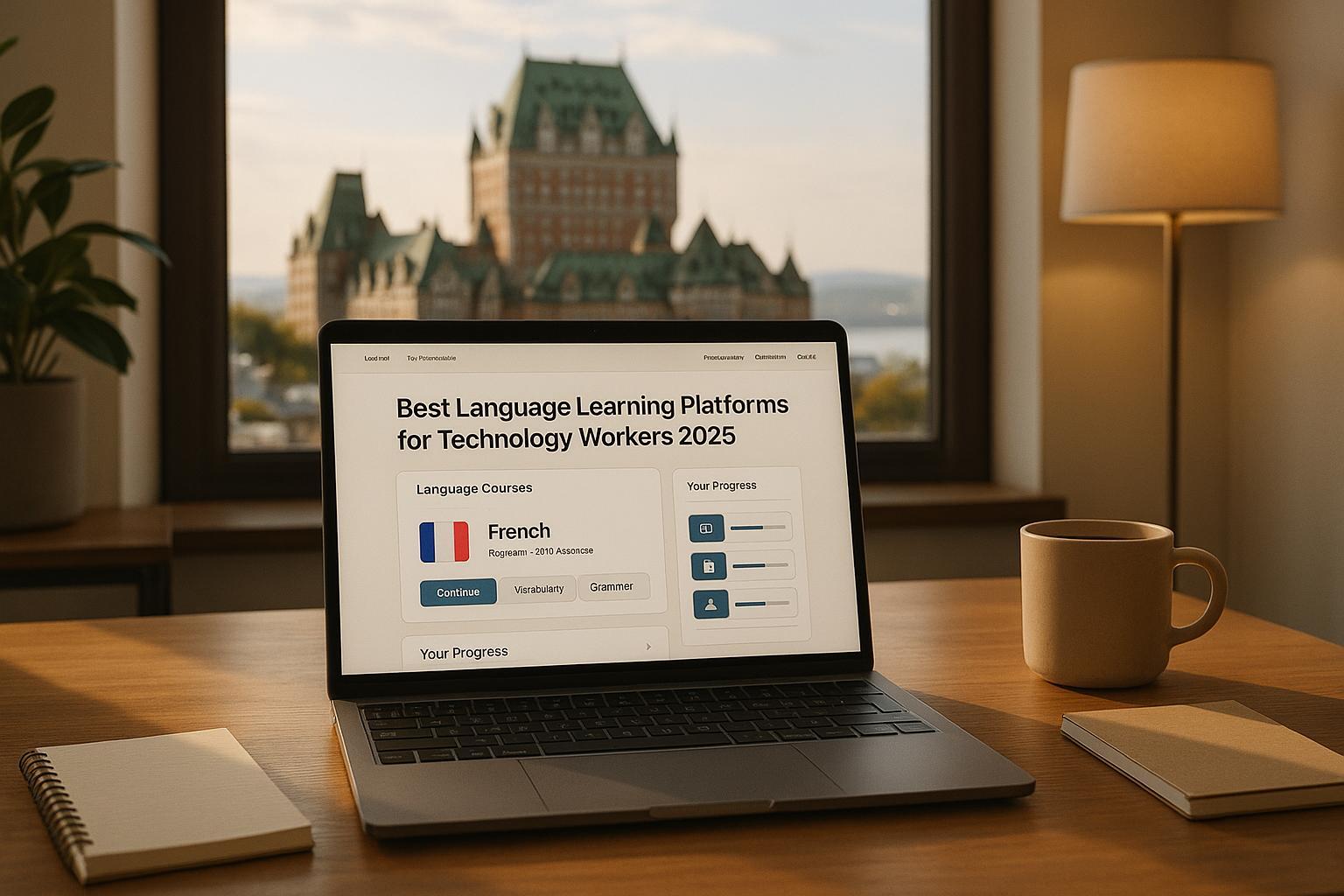
To get started with Francoflex, organize employees based on their French proficiency and job roles. The platform, powered by Madame AI, provides daily lessons tailored to each employee's language skills, native language, and specific job needs. Employers can upload industry-specific terms and workplace scenarios - like customer service scripts, safety guidelines, or technical documents - ensuring vocabulary practice stays relevant. These lessons, designed to last 10–15 minutes, fit easily into regular breaks or commutes and work for teams of any size, from small groups to large companies.
Meeting Bill 96 Compliance with Francoflex
Francoflex's personalized approach also helps businesses comply with Bill 96 requirements. As of June 1, 2025, companies with 25 or more employees must implement formal French-language training programs. Francoflex simplifies this process by automatically tracking employee progress and generating detailed reports specifically formatted for OQLF francisation plans. This ensures compliance with audit and certification requirements.
The platform focuses on all four key language skills - listening, reading, speaking, and writing - using professional scenarios tailored to workplace needs. Employers can monitor progress through dashboards that track individual learning time, ensuring the six-month training window for certification is met. Stéphane, a company president, shared his experience:
"Francoflex ensures I stay compliant at a small cost" [1].
Given the risk of non-compliance fines ranging from $3,000 to $30,000 per day, Francoflex's automated tracking is essential for managing risks effectively.
Connecting Francoflex with Workplace Systems
Francoflex also integrates smoothly with existing Learning Management Systems (LMS) and HRIS platforms, making it easy to centralize compliance tracking and lesson access. Employees can complete their French lessons directly within their usual workflows. Automated HR reports generated by the platform simplify documentation for OQLF submissions, eliminating the need for manual tracking. This seamless integration not only ensures compliance but also cuts training costs by up to 35% compared to traditional classroom methods, all while meeting provincial requirements efficiently.
Improving Training with Feedback and Data Analytics
Applying AI Analytics for Real-Time Feedback
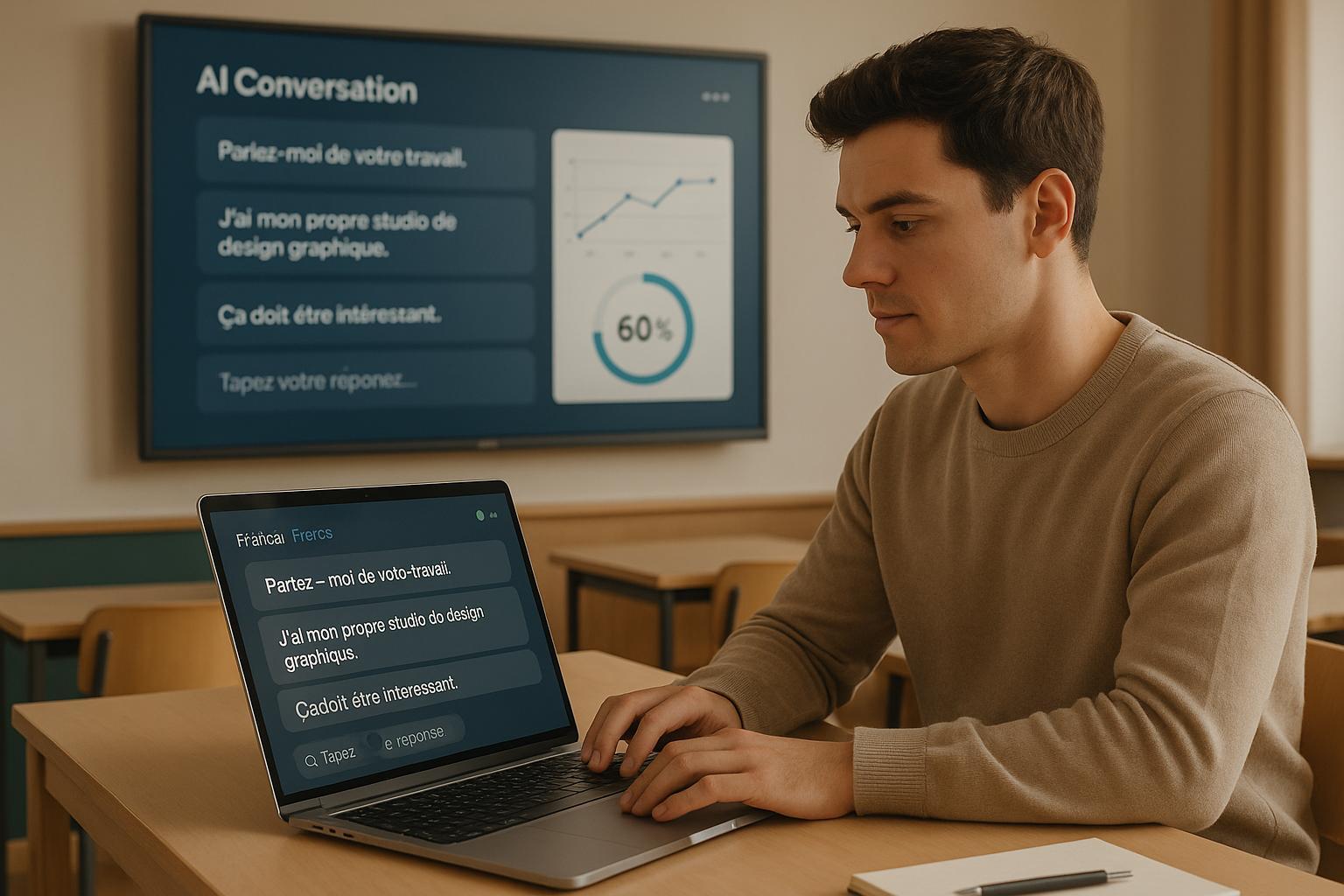
AI analytics bring a whole new level of precision to training by evaluating speech for phoneme accuracy, fluency, and intonation [14][15]. Beyond pronunciation, these tools also monitor grammar and vocabulary in real time. With streaming mode, scores update continuously as employees speak, giving them instant feedback on their pronunciation or phrasing. This feedback is layered, offering everything from full-text summaries to detailed word, syllable, and phoneme-level insights. Mispronunciations, omissions, and insertions are highlighted using colour codes, making it easier to spot and correct mistakes. For unscripted practice, a minimum of 20 seconds (about 50 words) is recommended to ensure reliable scoring [14][15]. These real-time insights provide a solid foundation for centralized tracking across your organization.
Tracking Progress and Compliance with Dashboards
Francoflex dashboards give managers and compliance teams a clear, centralized view of employee training progress and status. Real-time updates track essential metrics like learning time, proficiency levels, and readiness for OQLF certification, ensuring that training stays on track to meet Bill 96's six-month deadline. Automated tracking eliminates the hassle of manual record-keeping and generates audit-ready reports for francisation submissions. Whether managing a small team or a workforce of up to 50,000 employees, these AI-powered dashboards ensure accuracy and scalability. This centralized monitoring not only keeps training compliant with Bill 96 but also provides valuable insights for quarterly reviews and program adjustments.
Refining Training Programs Using Analytics
Quarterly reviews of performance data can reveal which workplace scenarios are the most challenging for employees. Companies leveraging AI-driven training methods report impressive gains: vocabulary retention improves by 50%, pronunciation accuracy by 41.7%, and grammar proficiency by about 45.5% compared to traditional approaches [16]. These insights allow organizations to fine-tune practice scenarios, adapt industry-specific vocabulary lists, and refine compliance strategies based on actual employee needs. AI-powered training can also cut costs by up to 30% and speed up the path to conversational fluency by 30% compared to traditional methods [17]. When combined with focused coaching, AI-generated reports help employers target specific areas for improvement, driving continuous progress.
Conclusion
Key Points for Canadian Employers
AI-powered oral practice offers Canadian employers a practical way to tackle three major challenges: meeting Bill 96 requirements within the six-month deadline, sidestepping the long wait times often associated with government programs, and achieving compliance without breaking the bank. Many HR professionals have expressed frustration with traditional government programs due to their delays. Francoflex eliminates these issues by offering 24/7 access to customized training tailored to each employee's native language and job responsibilities. Plus, its automated progress tracking generates audit-ready reports for OQLF submissions, all without disrupting daily operations.
Whether you're a small business or a large enterprise with up to 50,000 employees, Francoflex ensures compliance is both accessible and affordable. Stéphane, Président, shares:
"The new language laws are really affecting my small business. Francoflex ensures I stay compliant at a small cost" [1].
But this platform goes beyond just ticking off compliance boxes. By improving French language skills, employers can boost employee retention, helping workers thrive both professionally and personally in Quebec. For service-based industries, better French proficiency directly supports business growth by improving client communication.
The Future of Francisation with AI
While Francoflex is already helping businesses meet compliance and training goals, the future of francisation lies in leveraging AI to provide sustainable, efficient solutions. The platform's 10–15 minute micro-learning sessions fit seamlessly into even the busiest schedules. Its conversational AI offers employees a safe space to practise and build confidence without fear of judgment. Additionally, integration with existing learning management systems ensures training happens without interrupting workflows, and industry-specific vocabulary databases keep lessons relevant as business needs evolve.
Francoflex is paving the way for long-term success by combining compliance with real-world language skill development. The platform's ability to upload company-specific terminology and adapt to various industries ensures that training aligns with your business's growth. With features like automated reports, real-time feedback, and personalized learning paths, employers can focus on their core operations while employees develop the French skills they need to excel in Quebec's workplace. This smart use of AI technology transforms meeting Bill 96 and OQLF regulations from a compliance task into a strategic advantage for Canadian businesses.
FAQs
How does Francoflex support businesses in meeting Bill 96 requirements?
Francoflex uses AI-driven French language training to provide customized learning experiences that address the unique needs of each employee. The platform features automated tools for tracking progress and generating compliance reports, making it easier for businesses to adhere to Bill 96 requirements and achieve OQLF certification.
This solution enables companies to enhance workplace language skills effectively while staying aligned with Quebec's language regulations.
What features make Francoflex ideal for improving oral French skills in the workplace?
Francoflex provides tools designed to help employees sharpen their spoken French skills while addressing workplace demands. With its AI-powered virtual tutor, users engage in real-time, tailored conversations that match their skill level and professional environment. Plus, with 24/7 availability, employees can practise whenever it suits them.
The platform goes a step further by incorporating job-specific vocabulary and scenarios, making it especially relevant for industries like customer service, healthcare, and finance. It also tracks individual progress, giving managers access to detailed reports to keep an eye on team performance. On top of that, Francoflex helps meet Quebec's Bill 96 requirements by automatically generating OQLF-compliant language proficiency reports.
Built to grow with your organization, Francoflex works just as effectively for small teams as it does for enterprises with over 50,000 employees - ensuring every learner gets a personalized experience.
How does Francoflex seamlessly integrate with workplace systems?
Francoflex is a browser-based SaaS platform that blends seamlessly into workplace systems already in use. Employees can access it straight from their workstations without needing to install any extra software, making it incredibly easy to roll out across teams.
Key features include a progress tracking dashboard and automated compliance reports tailored for Bill 96. These tools allow HR managers and team leaders to monitor and manage alongside their current systems. Whether your organization is small or boasts a workforce of over 50,000, Francoflex adapts to meet your needs. Plus, with 24/7 accessibility, employees can engage in personalized oral practice anytime and from anywhere.