Best Language Learning Platforms for Healthcare workers 2025
Explore top language learning platforms for healthcare workers in Quebec, focusing on compliance, flexibility, and medical terminology training.
Best Language Learning Platforms for Healthcare workers 2025
For healthcare workers in Canada, learning French is becoming increasingly important, especially in Quebec, where Bill 96 enforces strict language requirements. Mastering medical French is not just about compliance - it's key to effective patient care. This article reviews three options for language training tailored to healthcare professionals, highlighting their features, pros, and cons.
Key Takeaways:
- Francoflex is an AI-powered platform designed for Quebec's healthcare workers, offering 24/7 access, medical vocabulary, and tools to meet Bill 96 requirements.
- The HELP program focuses on medical English but lacks flexibility and tools for Quebec's regulations.
- LINC/CLIC are free government-funded classes for basic French but don't cover medical terminology or workplace-specific needs.
Quick Comparison:
| Platform | Cost | Medical Focus | Flexibility | Bill 96 Support | Key Strength | Main Limitation |
|---|---|---|---|---|---|---|
| Francoflex | Custom pricing | High | 24/7 access | Yes | AI-personalized training | Pricing details not disclosed |
| HELP | Varies | Very High | Fixed schedule | No | Specialized medical curriculum | Limited scheduling flexibility |
| LINC/CLIC | Free | Minimal | Fixed classes | No | Cost-effective | Lacks healthcare-specific content |
If you're in Quebec, Francoflex stands out for its regulatory focus and flexibility. For general medical terminology, the HELP program is a good alternative. For basic French, LINC/CLIC is a free starting point, though additional resources will be necessary for healthcare-specific needs.
Caring for Patients in French | Online Training for Healthcare Professionals
1. Francoflex

Francoflex is an AI-powered platform designed to help healthcare professionals in Quebec meet the province's language requirements. It was created by Alexa Love-Tremblay, a seasoned language learning educator, and her co-founder Séraphin, an AI specialist with over 15 years of experience. Together, they've crafted a solution that addresses the unique challenges of learning French in professional settings.
AI-driven Personalization
Francoflex uses advanced AI to create personalized training experiences. The platform adapts to each user's native language, current proficiency, and specific job requirements. Its conversational AI feature allows users to practise listening and speaking in realistic workplace scenarios, anytime. This flexibility is especially helpful for those with unpredictable schedules, enabling better communication with patients.
"A platform that adapts to the level, native language and professional needs of employees, supported by AI."
- Francoflex
In addition to its tailored learning approach, Francoflex is designed to support regulatory compliance.
Compliance Support
The platform helps organizations meet the requirements of Bill 96 by preparing employees to meet OQLF standards within six months. It offers training modules that cover both general language skills and industry-specific terminology, ensuring institutions stay compliant.
"The new language laws are really affecting my small business. Francoflex ensures I stay compliant at a small cost."
- Stéphane, Président
Francoflex is also built to handle the needs of organizations of any size.
Scalability and Reporting
Whether it's a single learner or a team of 50,000, Francoflex scales seamlessly. Managers can access detailed, personalized reports and tracking tools to monitor progress, identify areas where extra support is needed, and simplify compliance audits. This scalable design ensures not only improved language skills but also adherence to critical regulatory standards.
2. Health English Language Pro (HELP) program

The Health English Language Pro (HELP) program is designed specifically for Canadian healthcare professionals looking to enhance their English language skills. However, the available program documentation leaves some questions unanswered. For instance, it doesn't specify whether the program incorporates AI-based personalization to adapt the learning experience to individual participants. Additionally, it's unclear how the program evolves to meet the changing language training needs within the healthcare sector.
These gaps highlight the importance of additional details to evaluate how well the HELP program aligns with both regulatory standards and the practical demands of healthcare professionals.
3. Government-funded language classes (LINC/CLIC)
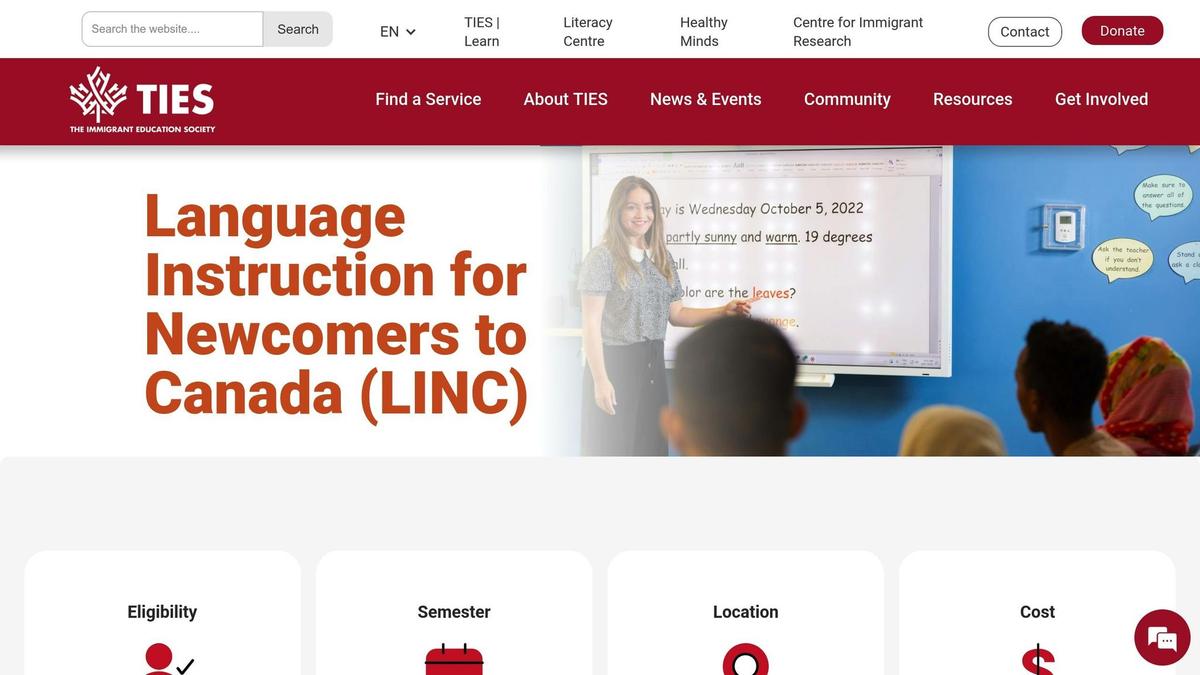
Government-funded programs such as LINC and CLIC provide foundational French instruction, focusing on basic conversational skills. While these are great for general language learning, they don't include the specialized medical vocabulary that healthcare professionals need. If you're a healthcare worker aiming to improve your medical French, you'll likely need to combine these classes with other resources that focus on industry-specific terms. In short, these programs are a good starting point, but additional tools are crucial for mastering the precise language required in healthcare settings.
Platform Comparison: Advantages and Disadvantages
When evaluating language-learning platforms for healthcare professionals, it's essential to consider personalization, scheduling flexibility, compliance support, and scalability. Each platform has unique features that cater to specific needs within the healthcare sector.
Francoflex is tailored for healthcare workers in Quebec, addressing the province's linguistic requirements. This AI-powered platform adapts lessons to your role and French proficiency, offering 24/7 access - ideal for irregular schedules. It also provides customized progress reports to help meet Bill 96 requirements and align with OQLF certification standards. While pricing is determined on a custom basis, Francoflex is scalable, accommodating both individual users and organizations with up to 50,000 employees.
The HELP program focuses on a structured curriculum designed to build medical vocabulary and improve patient communication. However, it lacks adaptive scheduling and does not include tools for Quebec's francisation requirements. Its content is highly specialized in medical terminology but limited in flexibility, following a fixed schedule.
Government-funded LINC and CLIC programs are a free option for eligible participants. These programs focus on general conversational skills and basic French grammar, taught in a traditional classroom setting. However, they do not offer the specialized medical terminology or workplace-specific scenarios required by healthcare professionals.
| Platform | Cost | Medical Focus | Flexibility | Bill 96 Support | Key Strength | Main Limitation |
|---|---|---|---|---|---|---|
| Francoflex | Custom pricing | High | 24/7 access | Yes | AI-powered personalization | Pricing details not publicly disclosed |
| HELP Program | Varies | Very High | Fixed schedule | No | Specialized medical curriculum | Limited scheduling flexibility |
| LINC/CLIC | Free | Minimal | Fixed classes | No | Cost-effective | Lacks healthcare-specific content |
For healthcare professionals with demanding schedules, flexibility is key. Francoflex's 24/7 availability lets users learn during night shifts or between patient appointments, while HELP and LINC/CLIC programs adhere to fixed schedules that may not suit the unpredictable nature of healthcare work.
When it comes to compliance, Francoflex stands out as the only platform offering tools and reporting specifically designed to meet Bill 96 requirements, easing the administrative workload of proving language proficiency. It integrates medical terminology and real-world scenarios into its lessons, providing practical and relevant learning experiences. In contrast, the HELP program focuses heavily on medical vocabulary and patient communication, while LINC/CLIC courses emphasize general language skills. Francoflex is also scalable, making it suitable for both individual practitioners and large hospital systems. HELP and LINC/CLIC, on the other hand, are better suited for smaller groups or individual learners. Each platform has its strengths and limitations, depending on the regulatory and workplace needs of healthcare professionals.
Conclusion
Selecting the right platform ultimately hinges on your specific regulatory requirements and workplace needs. Here's a quick breakdown of what each option brings to the table.
Francoflex stands out with its AI-powered personalization, round-the-clock access, and integrated progress tracking. These features make it a strong contender for meeting Bill 96 and OQLF standards. Its ability to scale from individual users to teams of up to 50,000 employees is particularly appealing for Quebec healthcare professionals navigating francisation requirements.
The HELP program focuses on medical terminology and patient communication, making it a good fit for practitioners with predictable schedules. However, it lacks tools specifically designed for Bill 96 compliance, which is a key factor for those working in Quebec.
Government-funded options like LINC and CLIC provide free basic French instruction, offering an affordable solution. That said, these programs aren't tailored to meet the specialized linguistic needs of the healthcare sector.
For organizations in Quebec aiming to enhance patient communication while adhering to language laws, Francoflex offers a practical and regulation-ready solution. Its focus on real-world medical scenarios and compliance tools addresses both professional development and legal obligations effectively.
As healthcare in Canada continues to evolve, choosing platforms that combine flexibility, specialization, and regulatory readiness will be critical to meeting bilingual healthcare standards.
FAQs
How does Francoflex help healthcare workers in Quebec meet Bill 96 requirements?
Francoflex offers AI-driven French language training tailored for healthcare professionals. Its platform is built to enhance workplace communication, help users grasp medical terminology, and align with the requirements of Bill 96.
With customized learning plans and progress monitoring, Francoflex equips healthcare workers to meet regulatory expectations while providing effective care to their French-speaking patients.
How does Francoflex's AI-powered personalization help healthcare professionals manage their busy schedules?
Francoflex's AI-driven platform is built to match your individual skill level and learning pace, making it practical for healthcare professionals to improve their French without interfering with their busy schedules.
With round-the-clock access to interactive lessons and customised content, you can seamlessly incorporate language learning into your day - whether it's during a quick lunch break, after a long shift, or on your day off. The platform is designed to accommodate the unpredictable nature of healthcare work, providing flexible tools that align with workplace demands and compliance standards.
What additional resources can healthcare workers use to learn medical French terminology alongside LINC/CLIC programs?
Healthcare workers participating in LINC (Language Instruction for Newcomers to Canada) or CLIC (Cours de langue pour les immigrants au Canada) programs can greatly improve their medical French vocabulary by using additional resources. Tools like language apps tailored to healthcare terminology, flashcards for medical terms, and interactive AI-powered platforms offer focused and practical learning opportunities.
Beyond these, attending workshops or webinars designed specifically for healthcare professionals, or consulting medical French glossaries and dictionaries, can further strengthen communication skills. These resources are excellent complements to LINC/CLIC programs, helping healthcare workers effectively meet both workplace expectations and regulatory requirements.