Introducing AI in your language school
How AI brings scalable, personalized francisation to Quebec language schools—improve workplace French, automate compliance reporting, and support instructors.
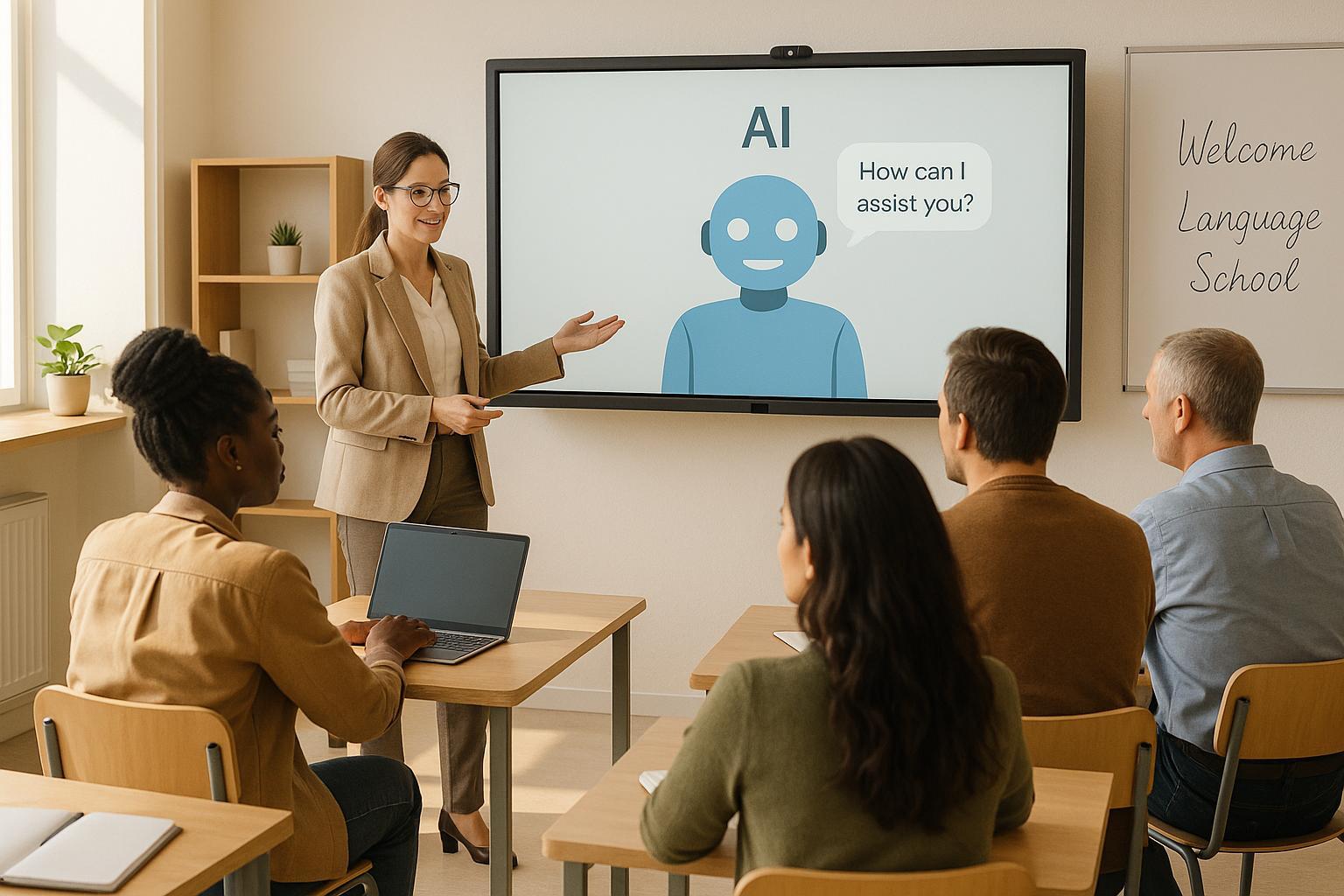
Introducing AI in your language school
Language schools in Quebec are facing increased demand for French training due to regulations like Bill 96. However, traditional teaching methods often fail to meet these needs, especially for workplace-specific language skills. AI-powered tools offer a solution by providing:
- Scalability: Train small or large teams without adding instructors or locations.
- Personalization: Tailor lessons to individual learning speeds, native languages, and industry-specific needs.
- Flexibility: 24/7 access helps learners integrate training into their schedules.
- Compliance Support: Automated progress tracking and reporting simplify meeting regulatory requirements.
Language Learning AI for Teachers & Students That Is Free!
Problems with Traditional Language Training
Traditional language training methods, while once effective, are now falling short in the face of modern workplace demands. With increasing regulatory requirements and a diverse workforce, these methods often fail to deliver the flexibility, scalability, and personalization needed for businesses to comply with laws like Bill 96 while keeping operations running smoothly.
Scalability and Access Problems
Traditional language schools operate with limited capacity, which quickly becomes a bottleneck when companies need to train large teams. Expanding capacity by hiring more instructors is not only expensive and time-consuming but often results in inconsistent teaching quality.
Geographic and scheduling constraints add another layer of difficulty. Employees working on different shifts can't always attend the same classes, and remote workers or those in smaller towns face significant barriers to accessing in-person instruction. With most language schools concentrated in cities like Montreal or Quebec City, serving businesses in other regions often requires costly satellite locations.
Peak demand periods only worsen these issues. When multiple companies rush to meet compliance deadlines, waitlists grow, leaving employers scrambling to meet their regulatory obligations.
Lack of Personalization and Workplace Relevance
Traditional language courses often take a generic, one-size-fits-all approach, which doesn't align with the unique needs of different industries. For example, a nurse needs to learn medical terminology in French, while a construction worker requires safety-related vocabulary. These specialized needs are rarely addressed effectively in standard curricula.
Additionally, traditional classroom settings don't accommodate varying learning speeds. Faster learners may get bored, while others may fall behind without the support they need. These methods also fail to consider learners' native language backgrounds, missing opportunities to address specific challenges or leverage linguistic similarities.
Another critical issue is the disconnect between classroom lessons and real-world applications. Employees might learn grammar and verb conjugations but still struggle with tasks like participating in team meetings, understanding technical documents, or handling customer interactions in French. Without training that integrates workplace-specific scenarios, the skills learned in class often don't translate effectively on the job.
Compliance and Documentation Challenges
Traditional methods also falter when it comes to meeting regulatory reporting requirements. To comply with OQLF certification, businesses must provide detailed documentation of training hours, employee progress, and proficiency levels. However, traditional schools often rely on manual record-keeping, which is prone to errors and inefficiencies.
Standardizing assessments across multiple instructors and classrooms is another hurdle, leading to inconsistent measurements of proficiency. HR managers typically lack real-time updates on employee progress, relying instead on sporadic reports during meetings or at the end of a course.
For small and medium-sized businesses without dedicated HR teams, the administrative burden of compiling data to meet OQLF requirements can be overwhelming. Traditional training methods rarely provide detailed skill breakdowns, making it harder to demonstrate progress in job-specific language abilities.
These limitations underscore the pressing need for AI-driven solutions to modernize and streamline francisation efforts.
How AI Improves Workplace Language Training
AI has stepped in to tackle the shortcomings of traditional language training, offering practical and efficient solutions for modern workplaces. These tools reshape how employees learn French, making the process faster, more targeted, and easier to manage, especially when compliance is a concern.
Personalized and Adaptive Learning
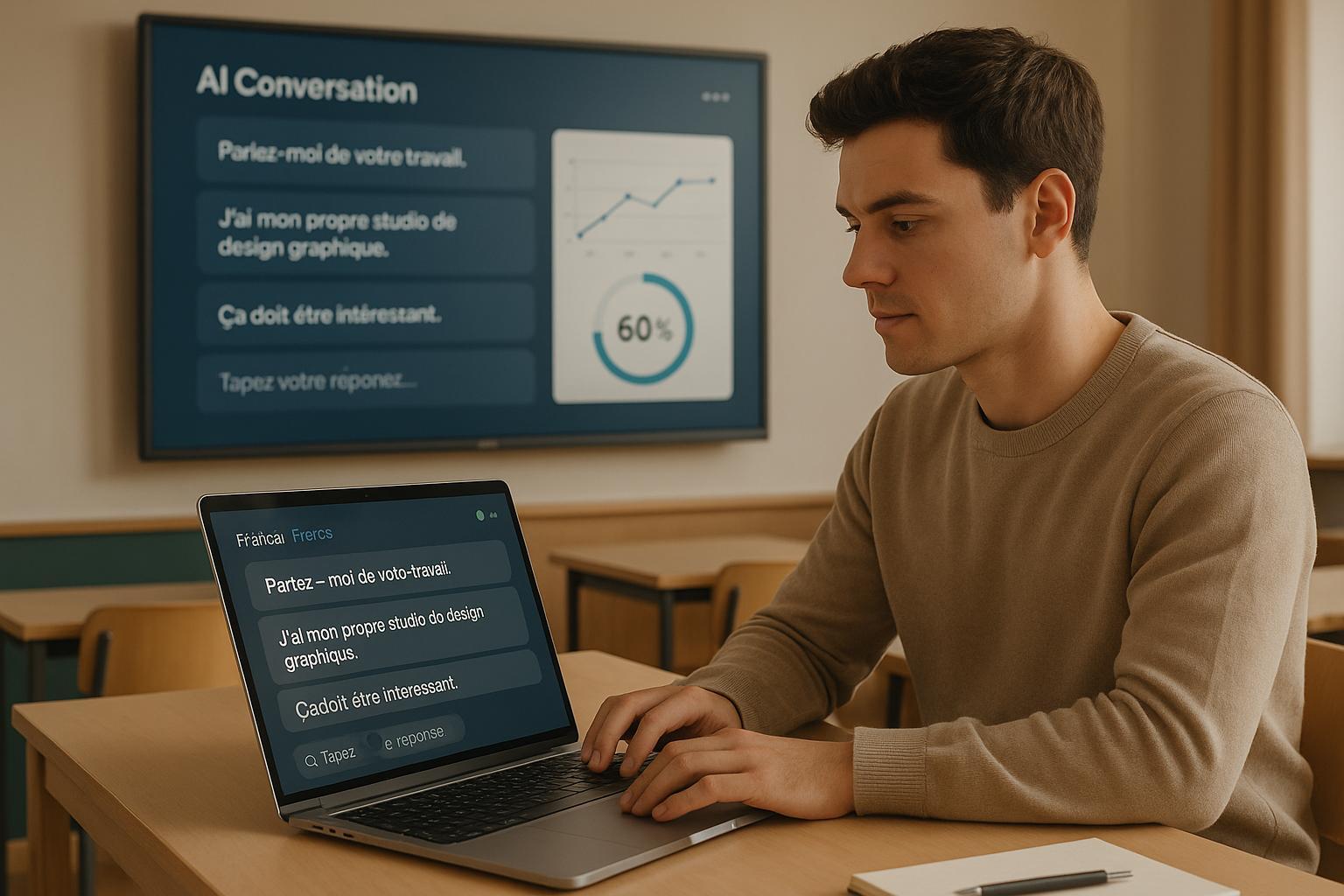
AI takes a tailored approach by assessing each employee's skill level, native language, and job requirements. It pinpoints gaps in knowledge and adjusts the difficulty of lessons in real time, keeping learners engaged without overwhelming or boring them.
This customization doesn't stop at skill level - it extends to workplace-specific needs. For example, a healthcare professional might focus on medical terminology, while someone in retail hones customer service phrases. This targeted learning ensures employees acquire the French they'll actually use on the job.
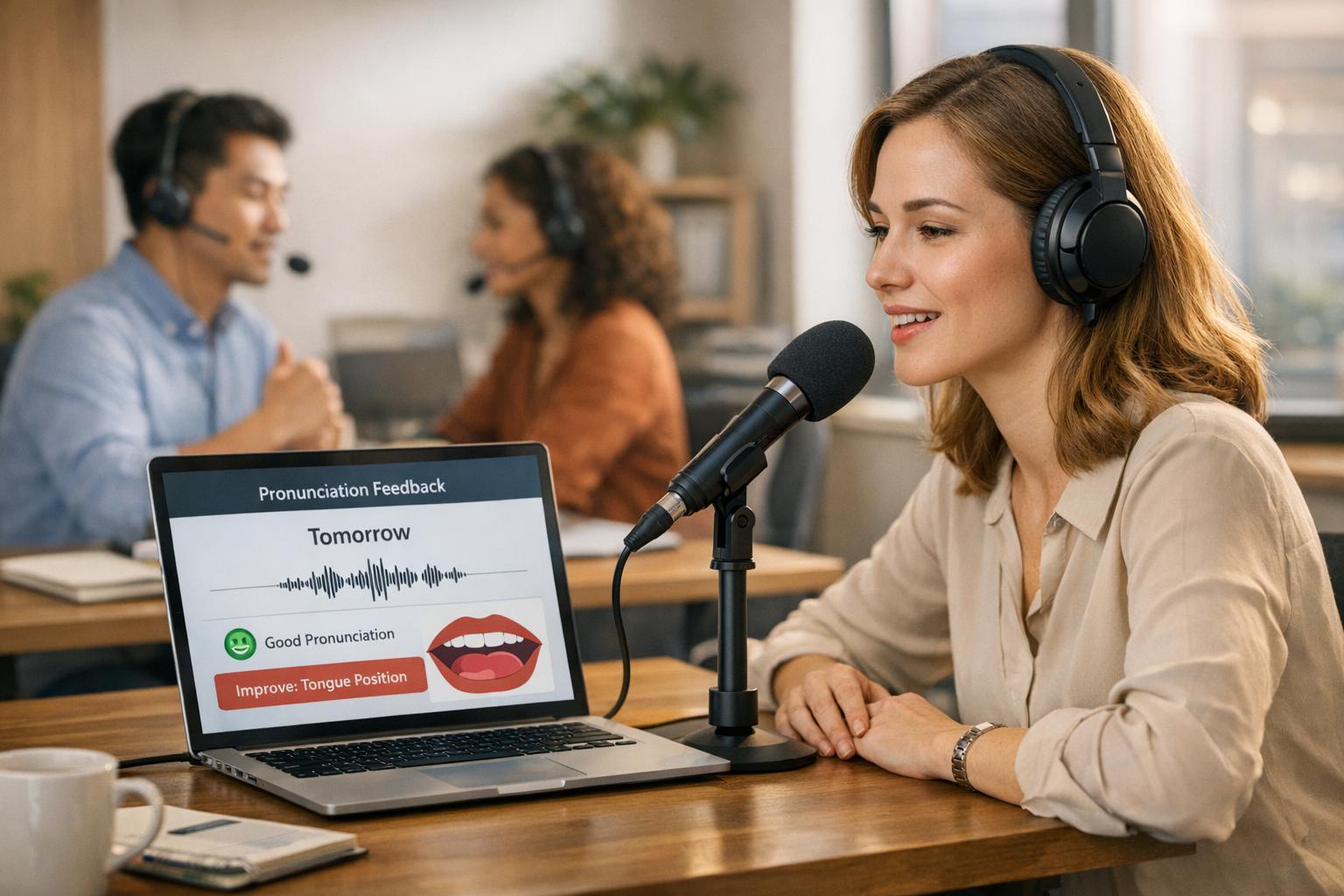
AI's adaptability also means it supports different learning speeds. Quick learners can advance smoothly, while others get extra help with specific challenges like pronunciation, verb conjugation, or understanding workplace safety terms. Plus, with 24/7 access, employees can learn during breaks, between shifts, or whenever their schedule allows. Daily interactions with an AI tutor provide instant feedback, helping learners improve steadily.
Scalability and Cost Efficiency
AI eliminates the resource constraints of traditional training methods. A single AI platform can serve a small team or scale up to train thousands of employees - without requiring more instructors, classrooms, or administrative staff. This scalability is particularly useful for businesses racing to meet Bill 96 compliance deadlines.
The subscription-based pricing model also replaces per-instructor or per-seat fees with an all-access structure, allowing unlimited use of learning tools. For companies training large teams, this approach can lead to considerable savings.
AI-powered training also breaks down geographic barriers. Employees in remote areas or smaller towns get the same quality instruction as those in major cities. Automated scheduling features further reduce disruptions by letting employees integrate training into their routines without fixed class times. Additionally, by handling tasks like scheduling and attendance tracking, AI reduces administrative overhead, freeing up HR teams to focus on other priorities.
Automated Compliance Reporting
One of AI's standout features is its ability to automatically track and document employee progress, making compliance straightforward. These platforms log training hours, test scores, and skill improvements, creating a clear picture of each employee's language development.
For businesses navigating Bill 96, AI-generated reports provide detailed metrics on employees' abilities in areas like reading comprehension, spoken communication, and workplace vocabulary. Automated translation tools also ensure workplace materials, contracts, and policies consistently use accurate French terminology - critical for passing compliance audits.
For smaller businesses without dedicated compliance teams, AI simplifies the process by compiling all necessary documentation into ready-to-submit formats. Custom progress reports can be generated on demand, offering insights into each employee's learning journey.
How to Add AI to Your Language School
AI has already shown its value in workplace language training, and now it's time to bring that potential into your language school. Here's how to integrate this technology smoothly while building on what already works and filling in the gaps.
Evaluating Your Current Programs and Infrastructure
Start by taking a close look at your current setup. Where are the bottlenecks? Are scheduling conflicts or limited capacity slowing you down? Dive into student data - completion rates, attendance patterns, and feedback - to spot areas where on-demand, personalized learning could make a difference.
Make sure your internet connection is reliable and check whether your learning management system can integrate AI tools. Remember, the goal here isn't to replace instructors but to support them. AI can handle repetitive tasks like drills, freeing teachers to focus on higher-level interactions.
When planning your budget, consider the potential savings. AI can cut down on administrative time, increase student capacity without additional staff, and even automate compliance reporting. This last point is especially important for businesses training employees under Bill 96, where compliance documentation is a key requirement.
Once you have a clear understanding of your current resources, you're ready to start blending AI into your instructor-led programs.
Combining AI with Instructor-Led Training
The best results come from pairing AI's capabilities with human expertise. AI is excellent for delivering consistent, personalized practice anytime, but instructors bring the human touch - guidance, motivation, and the ability to handle complex communication challenges.
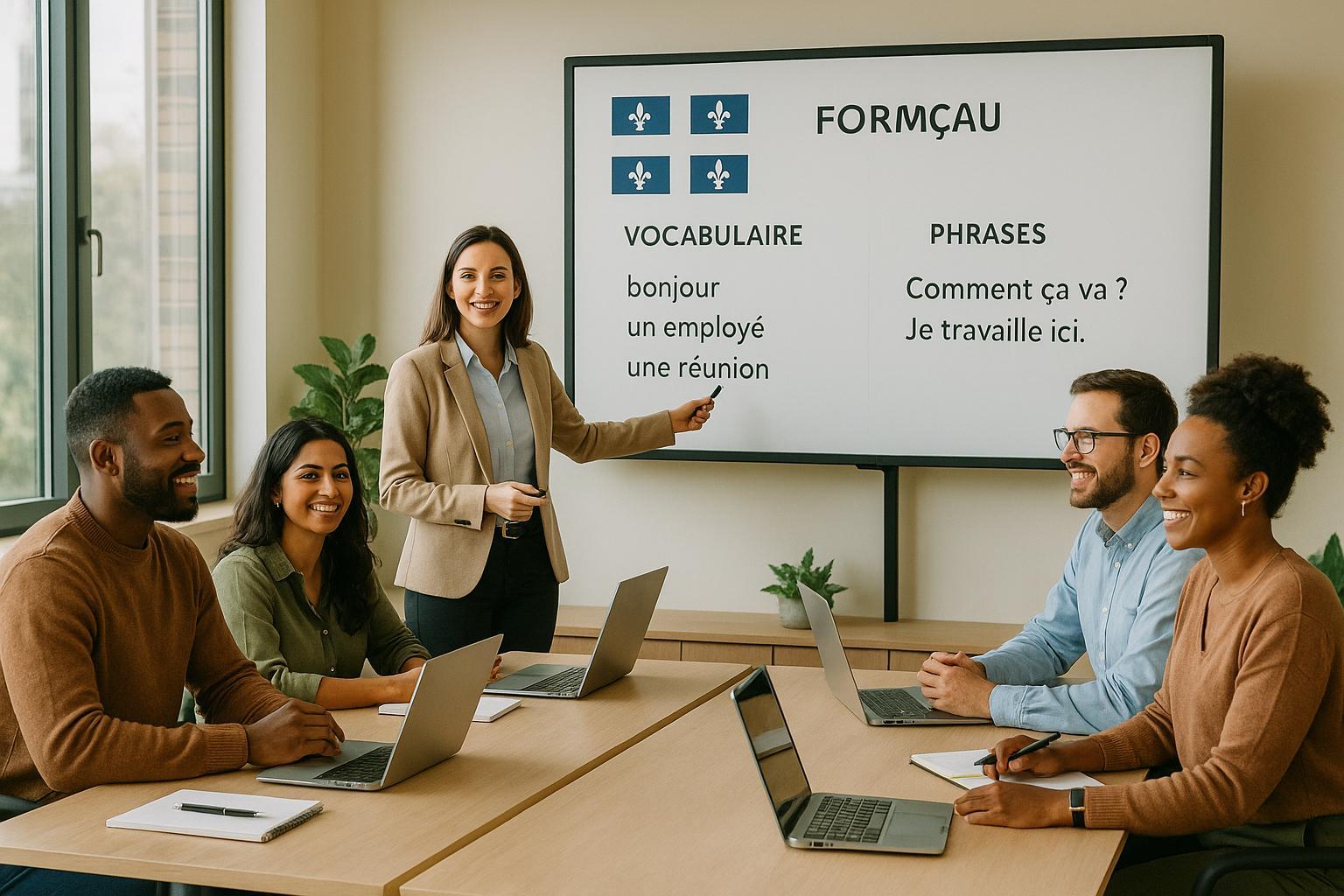
Let AI take on foundational skills like vocabulary, grammar, and pronunciation. This frees up instructors to focus on interactive, real-world applications. For instance, if AI introduces vocabulary related to restaurant service, an instructor can lead a role-play exercise where students practise serving customers. Similarly, after AI helps students refine their email-writing skills, an instructor can dive deeper into tone, formality, or workplace norms in Quebec.
AI-generated progress reports can also guide your teaching. If the data shows that multiple students are struggling with a particular concept, instructors can dedicate class time to tackle that issue directly. This way, lessons are tailored to actual needs, not just a preset curriculum.
Be clear with students about how to use each resource. AI is perfect for daily practice, quick questions, and building confidence through repetition. On the other hand, instructors are there for detailed explanations, cultural insights, and tackling high-stakes scenarios like job interviews or presentations.
Customizing AI for Industry-Specific Needs
To make AI truly effective, it needs to be tailored to industry-specific requirements. Generic French lessons won't cut it for workplace francisation. Employees need role-specific vocabulary and phrases, and AI platforms can be configured to deliver exactly that. Start by identifying the language demands of each industry and focus the AI's learning paths accordingly.
For healthcare workers, this might mean including medical terminology, patient communication phrases, and safety protocols. Retail employees may need customer service language, product descriptions, and strategies for handling complaints. Manufacturing workers could benefit from safety instructions, equipment-related vocabulary, and quality control terms.
Work with your clients to map out typical workplace scenarios. What conversations do employees have daily? What documents do they need to read or write? What meetings do they attend? These insights will help shape the AI's learning paths.
Take Francoflex, for example - it tailors content to learners' native languages and specific workplace contexts. Align these customizations with Bill 96 requirements by focusing on industry-specific vocabulary and scenarios. For customer-facing roles, emphasize conversational skills, while roles behind the scenes might focus on functional language.
Before rolling out a program, test it with a small group. Get feedback on whether the vocabulary fits, the scenarios feel realistic, and the difficulty level matches the job's requirements. Use this input to fine-tune the program - AI platforms make it easy to tweak content without starting from scratch.
Finally, document the customization process. Once you've built a strong program for one sector, you can adapt it for others with less effort. This approach allows you to scale your offerings while still delivering targeted, effective workplace francisation solutions.
Measuring Success and ROI for AI-Powered Francisation
Once you've implemented AI into your francisation program, measuring its success is essential. To do this effectively, focus on metrics that reflect both educational outcomes and compliance with regulatory requirements. AI's ability to personalize training ensures these metrics are grounded in meaningful data.
Key Metrics for Success
AI generates detailed performance data, making it easier to track progress and evaluate return on investment (ROI). With its focus on personalization and scalability, AI enables a clearer understanding of program impact.
To start, monitor engagement metrics like login frequency and time spent on the platform. High engagement levels often correlate with better learning outcomes. If activity dips, instructors can intervene early to re-engage learners.
Another critical measure is proficiency improvements. Track progress at regular intervals using standardized assessments. Research shows that AI-powered training delivers impressive results: vocabulary retention improves by 50%, pronunciation accuracy by 41.7%, grammar proficiency by 45.5%, speaking fluency by 40%, listening comprehension by 30.8%, learner engagement by 75%, and overall efficiency by 45.5% [1].
Completion rates are another key indicator of success. A personalized approach keeps learners motivated and helps ensure they complete the program, reflecting consistent progress.
For workplaces navigating Bill 96 requirements, certification readiness is vital. Measure how quickly learners reach proficiency levels needed for compliance. This helps organizations plan effectively for assessments and documentation while staying aligned with regulatory standards.
Conclusion
AI is reshaping how workplace francisation training is delivered in language schools. Traditional teaching methods often fall short when it comes to scaling programs, customizing learning experiences, and managing compliance documentation. AI-powered tools tackle these challenges head-on, offering solutions that adapt to each learner's pace, job role, and skill level - all while accommodating the flexibility today's workplaces require.
These platforms don't just improve language learning outcomes; they also simplify administrative tasks like tracking progress and generating compliance reports for Bill 96. By automating these processes, businesses can meet regulatory requirements without overloading HR teams or instructors with paperwork.
For language schools in Quebec, adopting AI isn't just an option - it's a necessity. Start by assessing your current training programs and pinpointing areas where AI can enhance instructor-led sessions. Look for tools that provide personalized learning paths, automated tracking, and job-specific content. These features directly address the scalability, customization, and compliance challenges that many schools face.
AI doesn't replace instructors - it works alongside them. It handles repetitive tasks, offers instant feedback, and tailors the learning experience to each individual. This combination of human expertise and AI-driven efficiency creates a more effective and scalable approach to workplace language training.
As workplace francisation requirements evolve, schools that integrate AI will be better equipped to help businesses navigate Bill 96 compliance. The tools are available, the advantages are undeniable, and the opportunity to revolutionize French language training is here.
FAQs
How can AI tools help meet the specific language needs of industries like healthcare or construction?
AI tools can be customized to incorporate specialized vocabulary, phrases, and real-world scenarios relevant to specific industries. For instance, healthcare workers can practise using medical terms and simulate patient interactions, while construction teams can concentrate on safety procedures and effective communication on job sites.
By aligning with the specific needs of different fields, AI-driven solutions help learners develop practical language skills that enhance both workplace efficiency and adherence to professional standards.
How can integrating AI improve language school programs and support instructors in their roles?
Integrating AI into language school programs brings a new level of customized learning. With tools like virtual tutors and adaptive learning platforms, students can move through lessons at a pace that suits them best. Plus, AI delivers real-time feedback, giving learners the chance to fine-tune their skills as they go.
For teachers, AI takes care of many administrative tasks and provides detailed insights into how students are performing and their learning habits. This frees up time for educators to focus on meaningful interactions, offering tailored guidance and building strong connections with their students - boosting both teaching effectiveness and student engagement.
How can AI help language schools and businesses comply with regulations like Bill 96, and what features make this possible?
AI can help language schools and businesses comply with regulations like Bill 96 by providing tools that make communication in French more accessible. Features such as real-time translation, automatic transcription, and captioning services ensure that all communications meet legal requirements and are available in French.
Using AI-driven platforms, organizations can simplify French language training for workplace francisation, boost employees' language skills, and make compliance processes more straightforward. This approach not only saves time but also helps businesses stay in step with Quebec's language laws.